Executive Summary
What are the best Santa Teresa surf spots for beginners? Playa Hermosa and Playa Carmen offer gentle, sandy-bottomed setups with highly manageable rip currents. As you travel further south into Mal País, the breaks transition into hollower, heavier reefs reserved for advanced surfers.
Our complete guide to surfing Santa Teresa covers the coastline at a glance — roughly 10 kilometers running from Playa Hermosa in the north down through Mal País and Cabuya in the south. What makes this stretch of santa teresa costa rica genuinely special is that it’s not one wave everyone shares regardless of ability — it’s a real spread of breaks that actually gets more advanced the further south you go. Here’s how to match your level to the right spot.
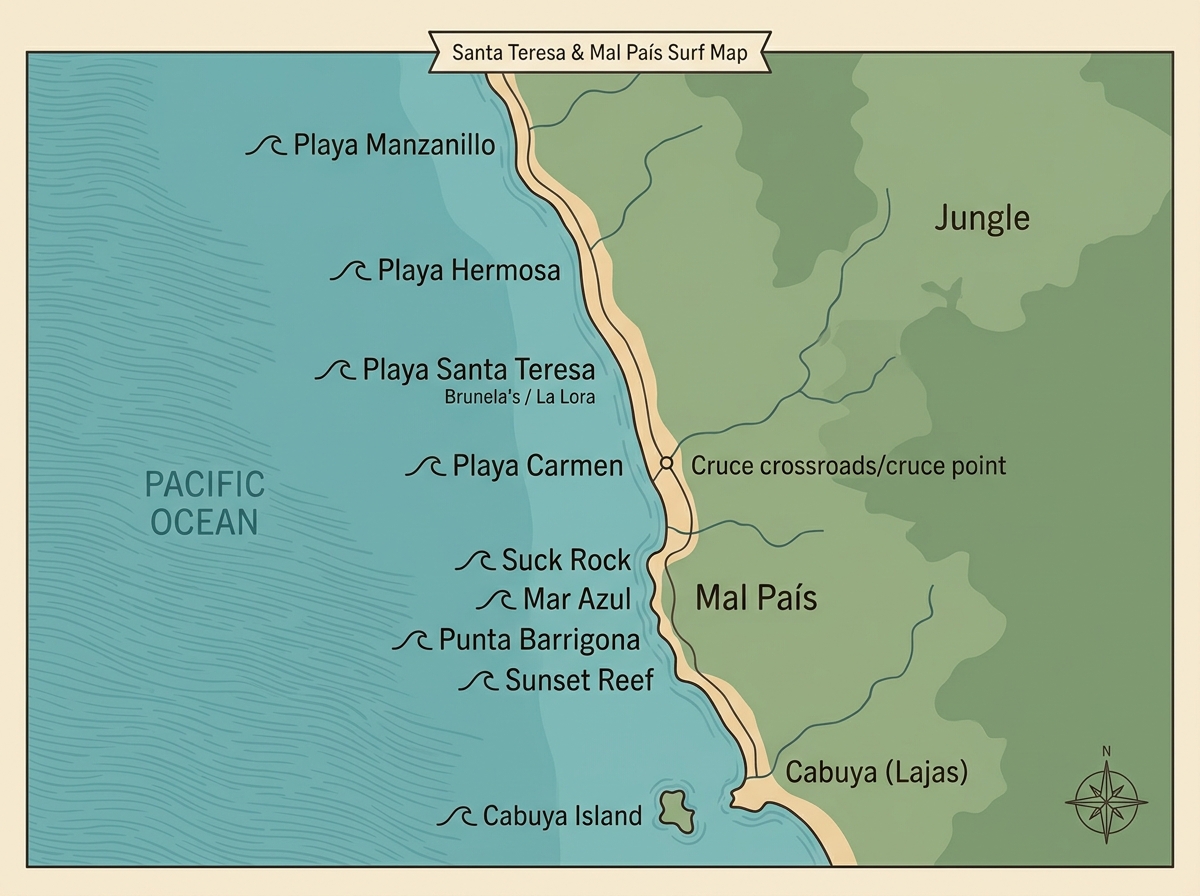
Map: Santa Teresa Coastline. Details: Visual layout charting the progression from beginner-friendly northern beaches to advanced southern reefs.
Beginner Santa Teresa Surf Spots
Playa Hermosa, at the north end, is built for exactly this. It’s a long stretch with waves that just keep rolling in, which makes it a genuinely good spot to work on your pop-up without worrying about running out of whitewater to practice on. When targeting the best Santa Teresa surf spots beginner waves, it works best on an incoming tide, from mid to high.
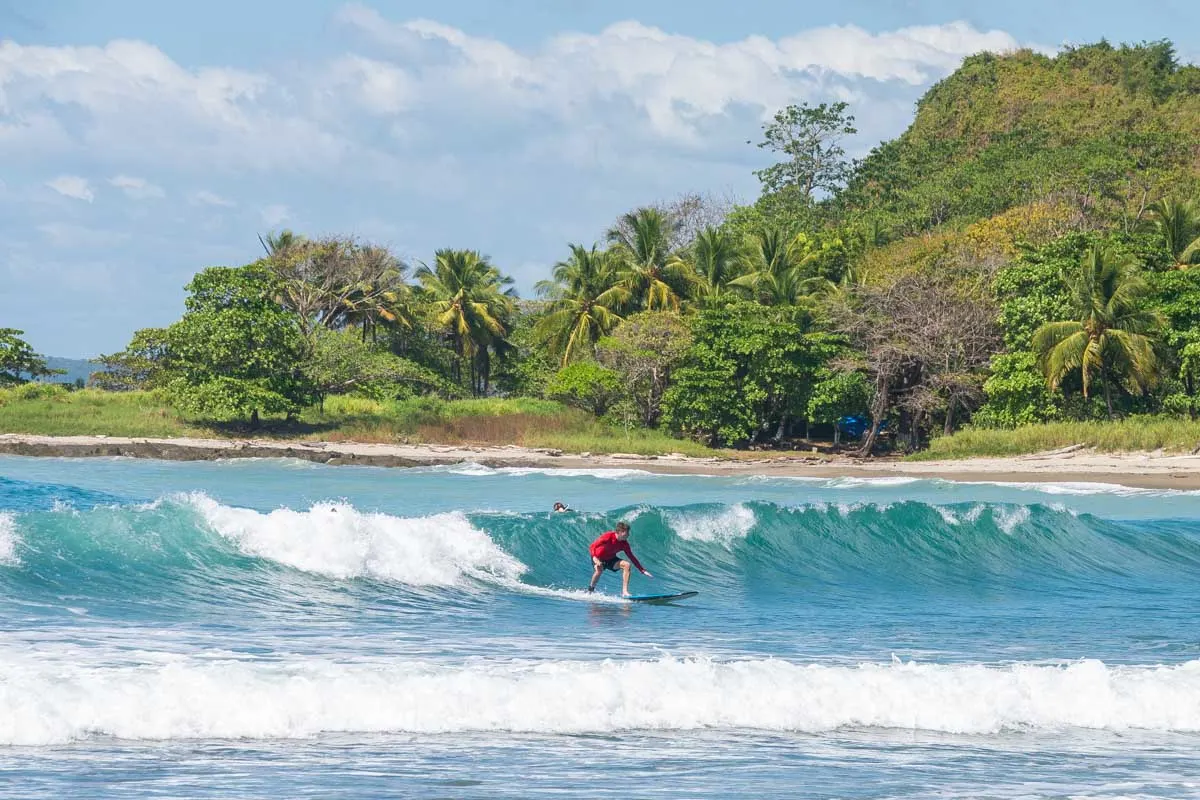
Spot: Playa Hermosa. Timing: Best on an incoming mid-to-high tide for long, rolling whitewater.
Playa Carmen, right at the crossroads between Santa Teresa and Mal País, is the area’s most consistent beginner-friendly option — a gently sloped sand bottom with multiple peaks producing long rights and shorter lefts. Two things make it a genuinely safer starting point than most other spots on this list: the rip currents here run noticeably weaker than elsewhere in the area, and it works on pretty much any tide, though high tide gives you the best version of the wave. It’s also the most popular spot in town for surf lessons — see our complete guide for schools worth booking, or run the local layout through our Spot Explorer.
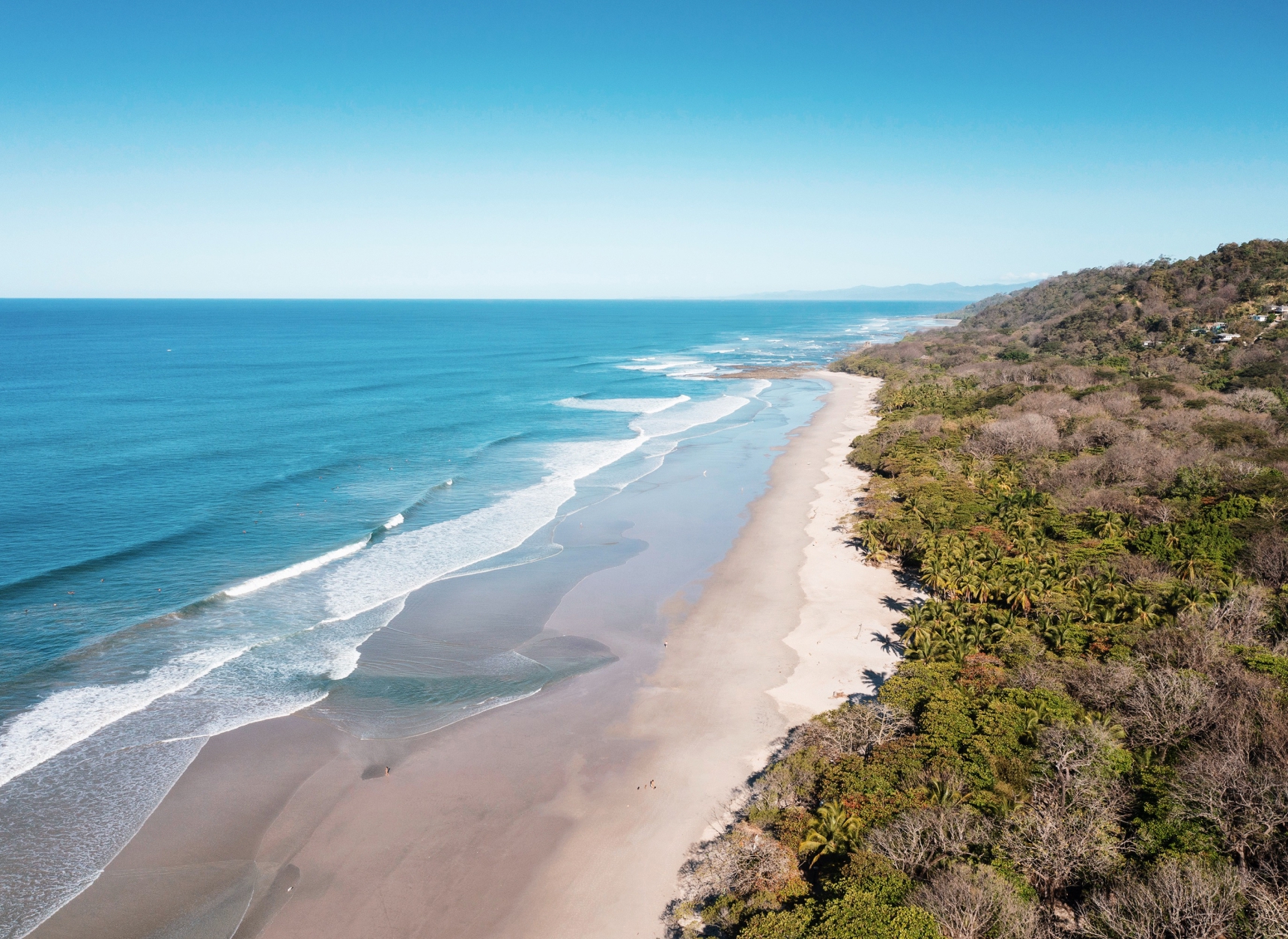
Spot: Playa Carmen. Timing: Works on almost any tide, ideal for novices seeking weaker currents.
Intermediate Surfing Costa Rica Santa Teresa
Playa Santa Teresa itself, including the well-known Brunela’s/La Lora stretch, is a step up from Carmen — a bowlier, punchier wave that turns mushy at high tide and steepens into something hollow and fast as the tide drops out. It breaks year-round and rarely goes flat, so it’s a reliable pick once you’re ready for more push than Carmen offers during your surfing costa rica santa teresa trip.
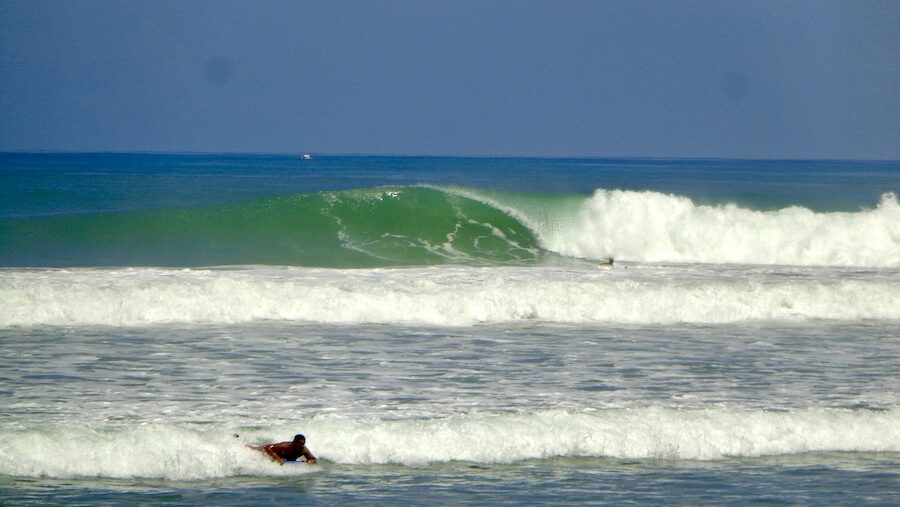
Spot: Playa Santa Teresa. Timing: Hollow and fast on a lower tide; reliable swell year-round.
Cabuya (also called Lajas), on the far side of the peninsula, is an easy, rolling right-hand point break peeling over a smooth stone bottom for around 150 yards — one of the longest rides in the area, and notably more mellow than the beach breaks in town even when it’s working well. It needs a midsize or bigger swell from the south to turn on, and it’s best surfed on an incoming tide from mid to high. Genuinely useful to know: this is the spot to head for when swell gets too big and messy on the main coastline — Cabuya often stays clean when everywhere else is blown out.
Playa Manzanillo, a few miles north of the main stretch, is quieter and less crowded — gentle waves and a good option if you want a break from the busier peaks without dropping down in difficulty.
Unlock the Complete Spot Breakdown
Don’t surf blind. Access high-fidelity maps, exact swell angles, local wind charts, and secret coordinates on the master dashboard.
Advanced Surf Santa Teresa Costa Rica
Mal País‘ reef breaks are where this coastline earns its more serious reputation. Suck Rock is a genuine point break capable of holding real size. Mar Azul, a locally famous left-hander, needs a 4–5 foot swell from the south or southwest paired with a rising high tide to work properly — sea turtles are a common sight in the lineup here, which is a nice bonus if you’re patient between sets.
Punta Barrigona is worth a specific note: it’s a long left that wraps around the point into what locals call a “hot dog wave,” and despite requiring real swell and experience to access safely, the wave itself doesn’t barrel much and stays relatively slow — which actually makes it a favorite among longboarders once they’re out there. Best at high tide.
Sunset Reef, by contrast, is genuinely heavy — a fast-breaking left with a long workable wall that turns hollow with size and offshore wind. Both this spot and Punta Barrigona come with real rock hazards, so they’re not places to improvise your way into without knowing the reef first if you are chasing heavy santa teresa surf.
For something further off the radar, Cabuya Island holds a strong left-hand point break on its far side, reachable by walking out from Cabuya town when the tide drops low enough to part the water — a genuine mission, and the walk under the tropical sun keeps crowds thin even when it’s firing.
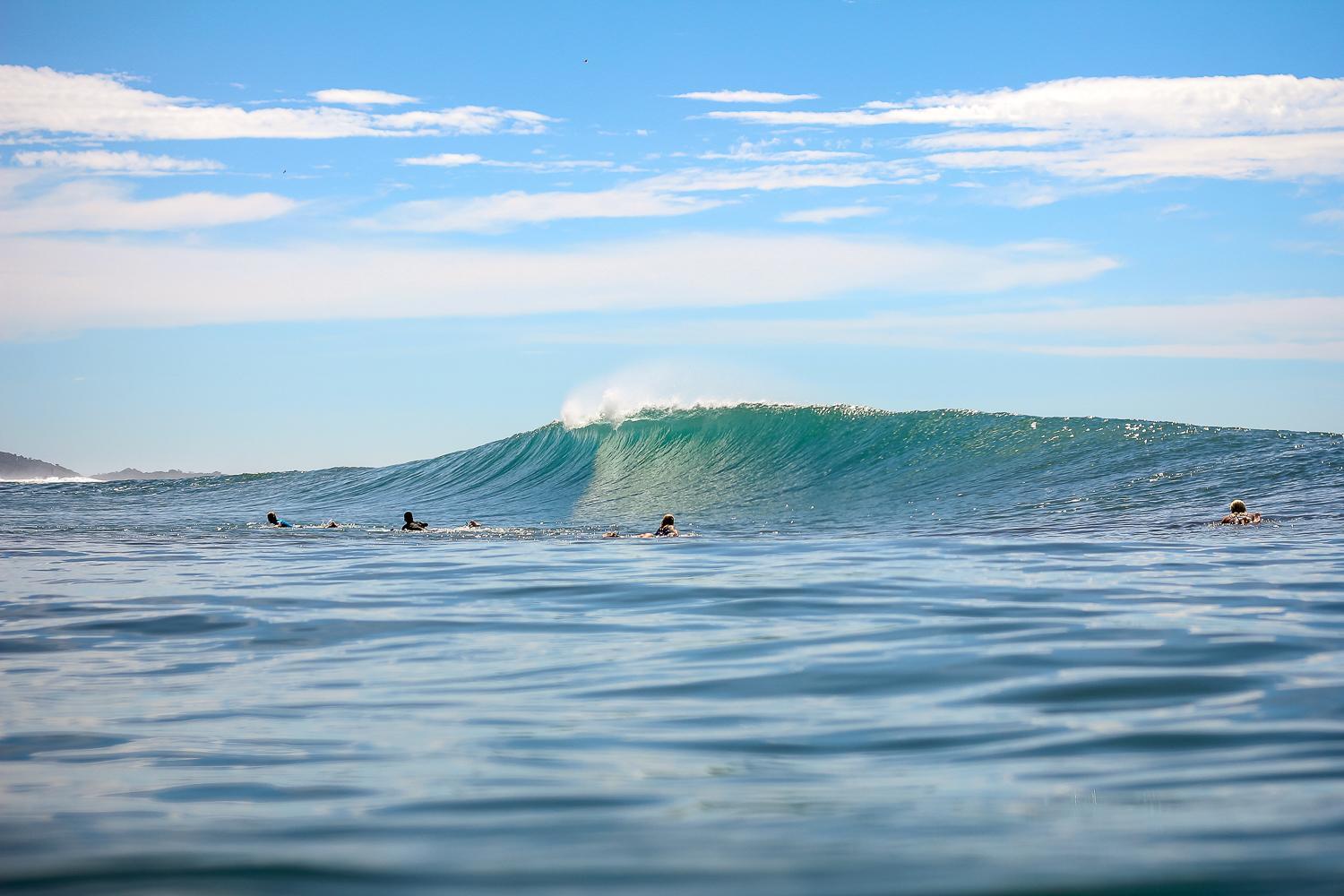
Spot: Mal País Reef Breaks. Timing: Requires solid southern swells and experienced local knowledge to navigate safely.
Santa Teresa Tide Cheat Sheet
| Surf Spot | Best Tide Timing |
|---|---|
| Playa Hermosa | Incoming, mid to high |
| Playa Carmen | Any tide (high tide best) |
| Playa Santa Teresa / Brunela’s-La Lora | Low tide (hollow); mushier at high |
| Cabuya / Lajas | Incoming, mid to high |
| Mar Azul | Rising high tide |
| Punta Barrigona | High tide |
| Sunset Reef | Best with size and offshore wind |
Which spot fits your session
- First time on a board: Playa Hermosa or Playa Carmen — both genuinely built for it.
- Comfortable at Carmen, want more push: Playa Santa Teresa/Brunela’s-La Lora on a dropping tide.
- Main coast is blown out or too big: head across to Cabuya for a cleaner, more mellow alternative.
- Genuinely advanced and chasing something serious: Mal País’ reef breaks — Suck Rock or Sunset Reef on a solid swell.
- Want a longboard-friendly wave with some real length: Punta Barrigona, despite its advanced-access reputation, is a slow, workable wall once you’re on it.
TACTICAL ALERT
Wherever you paddle out, standard ocean safety rules matter more here than in some of the mellower towns on this coast — know your entry and exit points before committing, avoid surfing alone at the remote reef breaks, and utilize proper travel logistics to navigate back to base safely.
Frequently Asked Questions
What’s the easiest wave in Santa Teresa for a complete beginner?
Playa Carmen — gentle, sandy-bottomed, works on any tide, and has weaker rip currents than most other spots in the area.
Where should I surf if the main Santa Teresa beach is too big?
Cabuya, on the other side of the peninsula, often stays clean and more manageable when the main coastline is blown out or oversized.
Is Punta Barrigona a good wave for beginners once they’re comfortable?
Not quite — it requires real swell and experience to access safely, even though the wave itself, once you’re riding it, is slower and more workable than its reputation suggests.
Do any of these spots have turtles in the lineup?
Yes — Mar Azul is known for regular sea turtle sightings while you wait between sets.
Keep reading
More on planning your Santa Teresa trip:
- The Complete Guide to Surfing Santa Teresa & Mal País, Costa Rica
- Where to Stay in Santa Teresa for Surfers
- Santa Teresa vs. Nosara: Which Nicoya Surf Town Is Right for You?
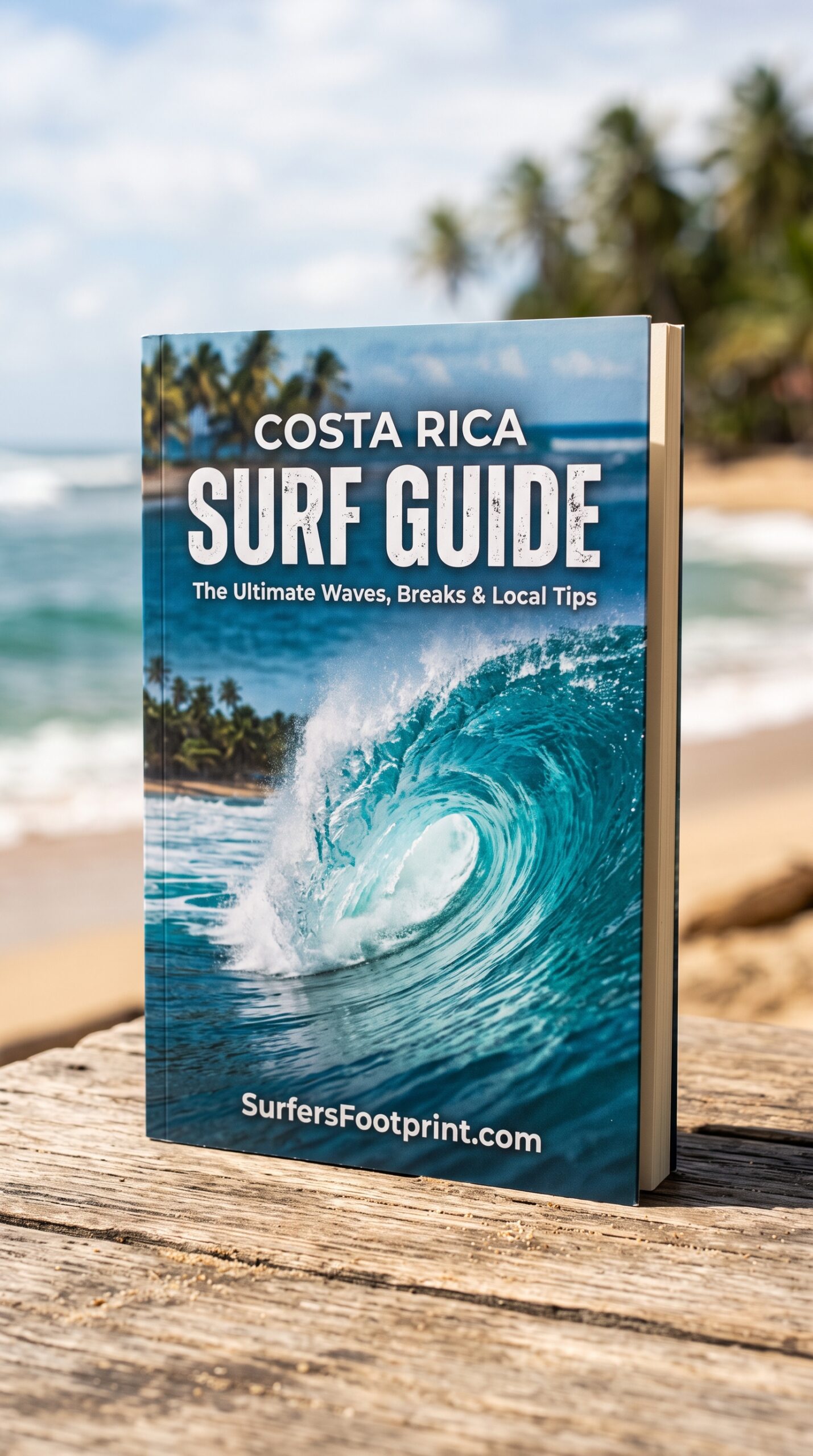
And if you haven’t already, grab the full Costa Rica Surf HQ planning guide — 40+ pages of offline maps, break profiles, and travel intel for every surf town in the country.