Beyond the "Soft-Top" Swarm: Uncrowded Costa Rica Surf Spots
You paddle out into the bathtub-warm water, lungs ready for the salt air, expecting the "Pura Vida" paradise promised by forty years of surfing Costa Rica travel posters. Instead, you find yourself playing human slalom, dodging fifty blue soft-tops in Tamarindo or jockeying for position in a caffeinated, aggressive lineup in Santa Teresa. In towns like Nosara, the dream often dissolves into a manufactured reality where you’re paying twenty dollars for a cheeseburger in a precinct where Spanish is a second language to the hum of expensive lifestyle brands.
Executive Summary & FAQ
Where are the best uncrowded surf spots in Costa Rica?
While popular hubs are heavily congested, venturing to the outer reefs of Esterillos, southern breaks near Dominicalito, or the protected shores of Ostional offers pristine, empty waves.
Is Costa Rica still good for a quiet surf trip?
Absolutely. By looking past the gentrified hubs and utilizing local knowledge, you can easily escape the crowds and find the solitary waves that made the country famous.
Unlock the Complete Spot Breakdown
Don't surf blind. Access high-fidelity maps, exact swell angles, local wind charts, and secret coordinates on the master dashboard.
Costa Rica isn't ruined—not by a long shot. But the "guidebook" approach to the country is fundamentally broken. To find the world-class waves that still break in solitude, you have to look past the gentrified hubs and the social media magnets.
Esterillos: The Art of Driving Past the Party for Empty Waves
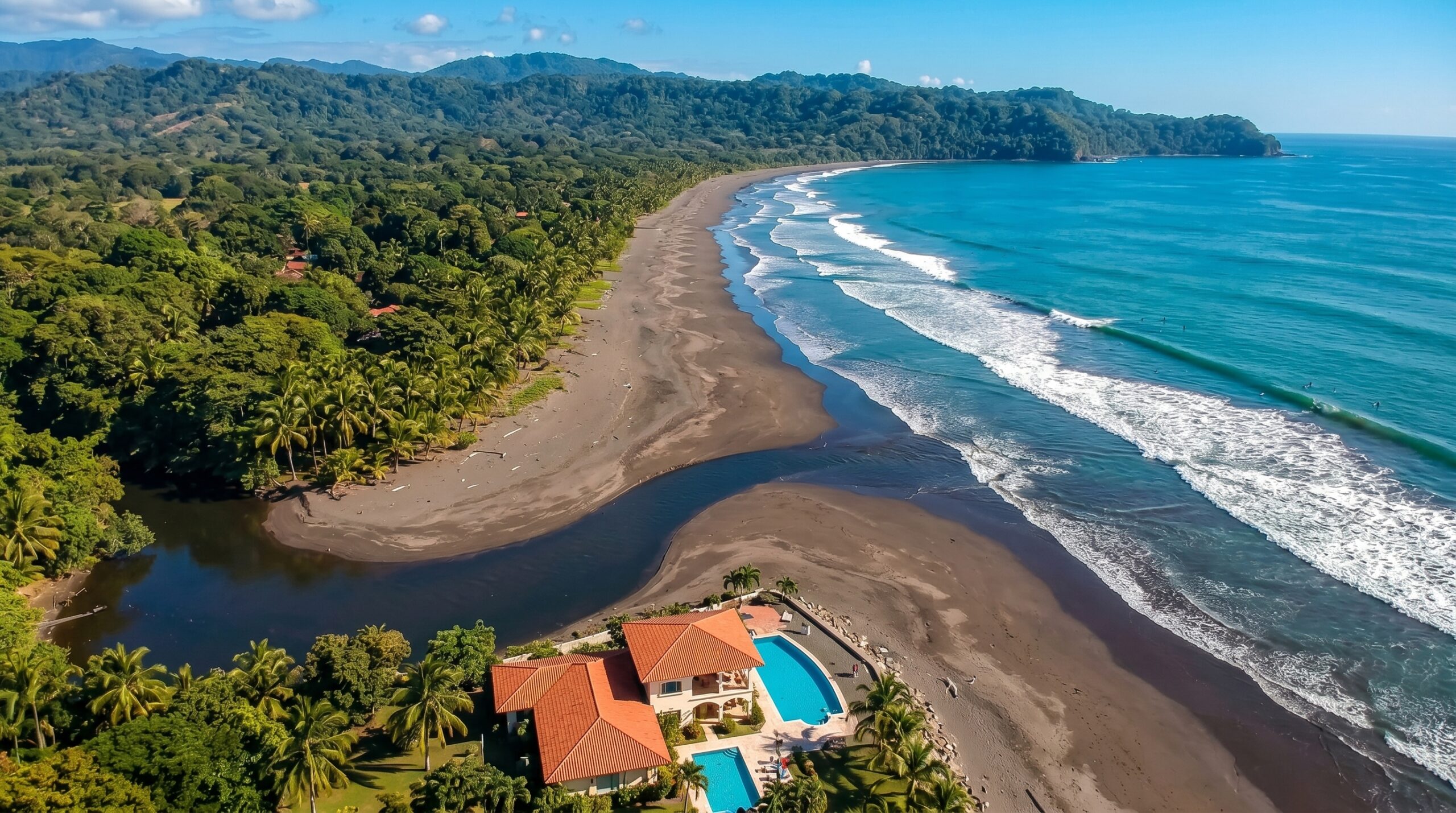
Most travelers touch down in San José and immediately pin the throttle toward the neon party lights of Jacó or the punishing, high-stakes barrels of Playa Hermosa. In their haste, they drive right past a stretch of coast that remains a genuine, salt-of-the-earth fishing town: Esterillos. This isn't a curated tourist experience; it’s a place where locals actually live, and the rhythm of life is dictated by the tide rather than the nightlife.
The real magic here lies in the outer reefs. Unlike the crowded beach breaks to the north, these peaks require a committed paddle that weeds out the casual crowd. When the swell is a modest pulse, these reefs are a longboarder's dream, offering endlessly peeling walls that favor alternative shapes and a relaxed glide. However, when a solid South swell marches in, the reefs transform, offering heavy, open faces that demand a shortboard and a high line. Just down the sand, El Pico serves up punchy, erratic sandbar peaks for those with the shoulder strength to navigate heavy rip currents.
"Finding outer reefs like this used to require weeks of driving around blindly."
To avoid that old-school guesswork, I rely on a modern Costa Rica surf guide from Costa Rica Surf HQ. It breaks down the specific tide windows and swell angles that make these reefs "turn on," allowing you to score without broadcasting the location to the masses on Instagram.
Escaping the "Santa Teresa Trap": Surfing Costa Rica's Southern Jungle
There is a specific phenomenon I call the "Santa Teresa Trap," where surfers arrive on a 90-day visa, cross the Gulf of Nicoya, and never leave. They spend their entire trip breathing the dust of endless ATV convoys and smelling expensive sunblock while sharing every set wave with an army of expats. To find the "real" Costa Rica, you must head further south toward the Dominical and Uvita region.
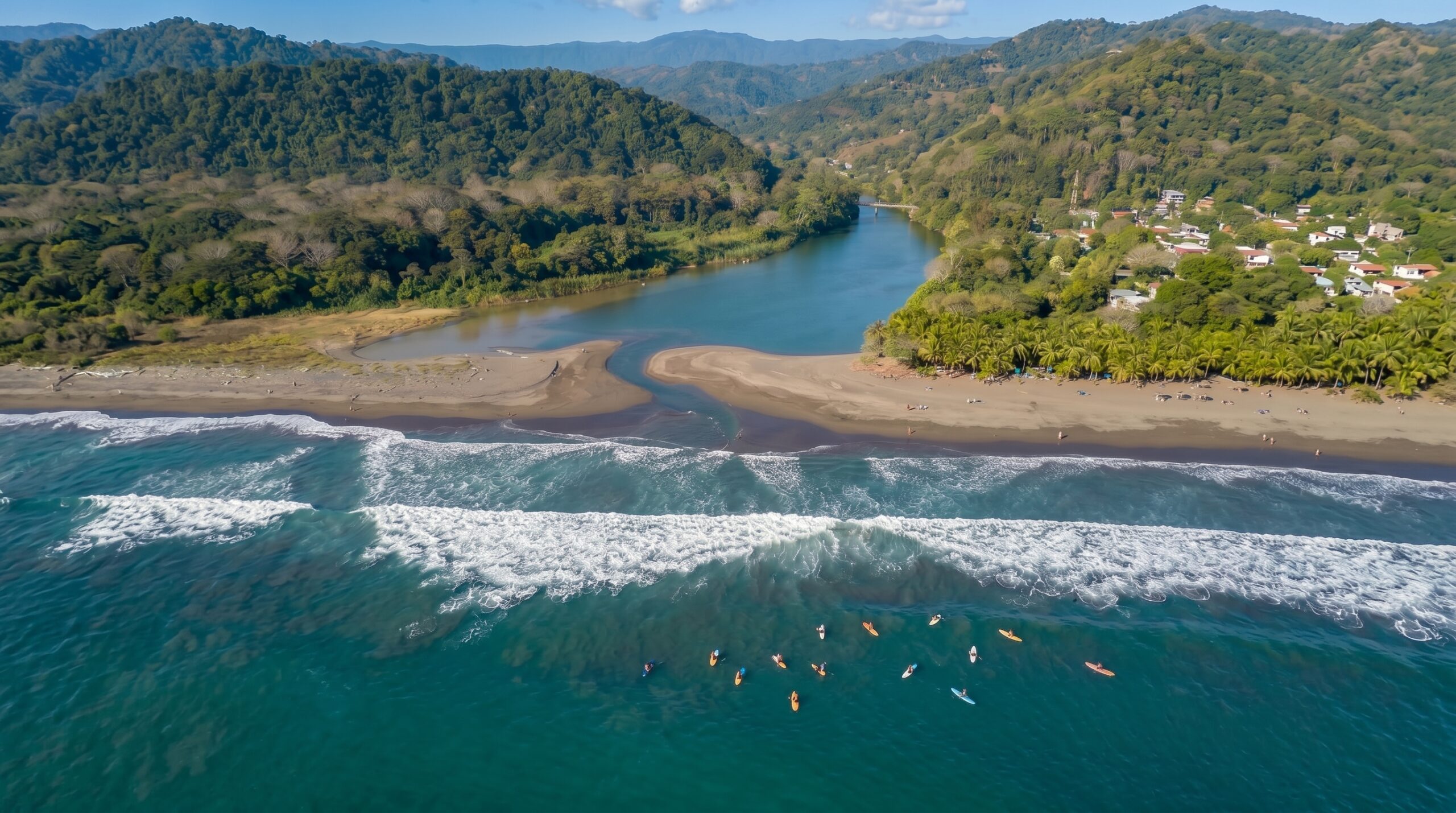
Here, the geography undergoes a radical shift. The gentrified, dry forests of the north give way to a landscape where the thick, emerald jungle literally meets the tide line. While the main break at Dominical is a board-snapping powerhouse, the nearby Punta Dominicalito offers a "salt-misted silence" that feels worlds away from the chaos. Accessing the left-hand point requires a physical "buy-in": a scramble down a steep hill and a timed jump off shallow, barnacle-crusted rocks.
This minor barrier keeps the crowds at bay. Even on a firing Southwest swell, you might share the lineup with only a few locals. Further south, Playa Hermosa de Uvita (the mellow, black-sand namesake of its northern cousin) offers a perfectly empty, relaxed session for those who value space over adrenaline. By using an Accommodation Finder to secure a local cabin tucked into the canopy rather than a party hostel, you can fully immerse yourself in the raw jungle atmosphere.
Ostional: Surfing the Silent Sanctuary
If Nosara’s Playa Guiones is the commercial heart of the Nicoya Peninsula—consistent but perpetually crowded—then Playa Ostional is its sophisticated, silent shadow. As a protected sea turtle sanctuary, Ostional is blissfully devoid of the "soft-top" chaos found elsewhere, offering a true haven for uncrowded waves. There are no beginner surf schools here, and the etiquette of the lineup reflects a much higher skill ceiling and a deeper level of respect.
The aesthetic is hauntingly beautiful: a massive stretch of shifting black sand peaks where the only spectators are pelicans gliding overhead and the occasional giant turtle surfacing in the lineup. At high tide, the wave is unapologetic, offering firing, hollow barrels that demand proper equipment. This is not the place for a weak board or a lack of preparation. I always cross-reference the Gear Essentials on Costa Rica Surf HQ to ensure I’ve packed a proper "step-up" board for these heavier days. The experience of scoring an empty, thumping frame on black sand is a powerful reminder of why we travel in the first place.
The Pavones Paradox: Finding Soul in the "Wrong" Season

Pavones is the stuff of legend—one of the longest left-hand point breaks on the planet. But during the "prime" wet season, social media coordination turns the tiny town into the most crowded theater in Central America. The secret to reclaiming the soul of this wave is the "Pavones Paradox": visit during the dry season months of December or January.
Technically, this is the "wrong" time for world-class swells, but it is the absolute right time for the soul. The massive, heavy walls are replaced by perfectly groomed, thigh-high peelers that seem to run forever. With a longboard or a high-volume fish, you can clock more time on a wave in one session than most people get in a month.
"You get the magic of the wave, without the stress of the pack."
The Modern Nomad’s Protocol: Earning the Peak
Scoring these empty peaks is not a matter of luck; it is a matter of preparation. In the modern era, "Pura Vida" is earned through a specific protocol:
- Vehicle & Transit: A 4x4 is non-negotiable for the muddy, rutted tracks leading to spots like Ostional or the southern points. However, for the transit legs, the local air-conditioned buses are a steal at $14 from San José. Tools like a Travel Logistics and Budget Planner can help you decide exactly when to splurge on the rental and when to take the bus.
- Physical Conditioning: The empty waves are often separated from the road by heavy paddle-outs and long walks. A physical prep routine focusing on core stability and shoulder endurance is essential. These waves are "earned" through fitness, not just a plane ticket.
- Ethical Intelligence: Use tools like the Spot Guide responsibly. The goal is to find the "hidden in plain sight" gems, not to blow up the last remaining secret spots.
Reclaiming Pura Vida
Costa Rica remains the ultimate tropical frontier, but the era of stumbling into an empty, world-class lineup from your hotel front door in Tamarindo is over. The "Pura Vida" experience now belongs to those willing to drive a little further, paddle a little harder, and step away from the convenience of the famous hubs.
Is the ease of a crowded, expensive town worth the sacrifice of the quality and solitude found in the wilder corners of the coast? For the dedicated surfer, the answer is found in the silence of the outer reef and the spray of a wave shared with no one.
Beyond the “Soft-Top” Swarm: Uncrowded Costa Rica Surf Spots
You paddle out into the bathtub-warm water, lungs ready for the salt air, expecting the “Pura Vida” paradise promised by forty years of surfing Costa Rica travel posters. Instead, you find yourself playing human slalom, dodging fifty blue soft-tops in Tamarindo or jockeying for position in a caffeinated, aggressive lineup in Santa Teresa. In towns like Nosara, the dream often dissolves into a manufactured reality where you’re paying twenty dollars for a cheeseburger in a precinct where Spanish is a second language to the hum of expensive lifestyle brands.
Executive Summary & FAQ
Where are the best uncrowded surf spots in Costa Rica?
While popular hubs are heavily congested, venturing to the outer reefs of Esterillos, southern breaks near Dominicalito, or the protected shores of Ostional offers pristine, empty waves.
Is Costa Rica still good for a quiet surf trip?
Absolutely. By looking past the gentrified hubs and utilizing local knowledge, you can easily escape the crowds and find the solitary waves that made the country famous.
Unlock the Complete Spot Breakdown
Don’t surf blind. Access high-fidelity maps, exact swell angles, local wind charts, and secret coordinates on the master dashboard.
Costa Rica isn’t ruined—not by a long shot. But the “guidebook” approach to the country is fundamentally broken. To find the world-class waves that still break in solitude, you have to look past the gentrified hubs and the social media magnets.
Esterillos: The Art of Driving Past the Party for Empty Waves
Most travelers touch down in San José and immediately pin the throttle toward the neon party lights of Jacó or the punishing, high-stakes barrels of Playa Hermosa. In their haste, they drive right past a stretch of coast that remains a genuine, salt-of-the-earth fishing town: Esterillos. This isn’t a curated tourist experience; it’s a place where locals actually live, and the rhythm of life is dictated by the tide rather than the nightlife.
The real magic here lies in the outer reefs. Unlike the crowded beach breaks to the north, these peaks require a committed paddle that weeds out the casual crowd. When the swell is a modest pulse, these reefs are a longboarder’s dream, offering endlessly peeling walls that favor alternative shapes and a relaxed glide. However, when a solid South swell marches in, the reefs transform, offering heavy, open faces that demand a shortboard and a high line. Just down the sand, El Pico serves up punchy, erratic sandbar peaks for those with the shoulder strength to navigate heavy rip currents.
“Finding outer reefs like this used to require weeks of driving around blindly.”
To avoid that old-school guesswork, I rely on a modern Costa Rica surf guide from Costa Rica Surf HQ. It breaks down the specific tide windows and swell angles that make these reefs “turn on,” allowing you to score without broadcasting the location to the masses on Instagram.
Escaping the “Santa Teresa Trap”: Surfing Costa Rica’s Southern Jungle
There is a specific phenomenon I call the “Santa Teresa Trap,” where surfers arrive on a 90-day visa, cross the Gulf of Nicoya, and never leave. They spend their entire trip breathing the dust of endless ATV convoys and smelling expensive sunblock while sharing every set wave with an army of expats. To find the “real” Costa Rica, you must head further south toward the Dominical and Uvita region.
Here, the geography undergoes a radical shift. The gentrified, dry forests of the north give way to a landscape where the thick, emerald jungle literally meets the tide line. While the main break at Dominical is a board-snapping powerhouse, the nearby Punta Dominicalito offers a “salt-misted silence” that feels worlds away from the chaos. Accessing the left-hand point requires a physical “buy-in”: a scramble down a steep hill and a timed jump off shallow, barnacle-crusted rocks.
This minor barrier keeps the crowds at bay. Even on a firing Southwest swell, you might share the lineup with only a few locals. Further south, Playa Hermosa de Uvita (the mellow, black-sand namesake of its northern cousin) offers a perfectly empty, relaxed session for those who value space over adrenaline. By using an Accommodation Finder to secure a local cabin tucked into the canopy rather than a party hostel, you can fully immerse yourself in the raw jungle atmosphere.
Ostional: Surfing the Silent Sanctuary
If Nosara’s Playa Guiones is the commercial heart of the Nicoya Peninsula—consistent but perpetually crowded—then Playa Ostional is its sophisticated, silent shadow. As a protected sea turtle sanctuary, Ostional is blissfully devoid of the “soft-top” chaos found elsewhere, offering a true haven for uncrowded waves. There are no beginner surf schools here, and the etiquette of the lineup reflects a much higher skill ceiling and a deeper level of respect.
The aesthetic is hauntingly beautiful: a massive stretch of shifting black sand peaks where the only spectators are pelicans gliding overhead and the occasional giant turtle surfacing in the lineup. At high tide, the wave is unapologetic, offering firing, hollow barrels that demand proper equipment. This is not the place for a weak board or a lack of preparation. I always cross-reference the Gear Essentials on Costa Rica Surf HQ to ensure I’ve packed a proper “step-up” board for these heavier days. The experience of scoring an empty, thumping frame on black sand is a powerful reminder of why we travel in the first place.
The Pavones Paradox: Finding Soul in the “Wrong” Season
Pavones is the stuff of legend—one of the longest left-hand point breaks on the planet. But during the “prime” wet season, social media coordination turns the tiny town into the most crowded theater in Central America. The secret to reclaiming the soul of this wave is the “Pavones Paradox”: visit during the dry season months of December or January.
Technically, this is the “wrong” time for world-class swells, but it is the absolute right time for the soul. The massive, heavy walls are replaced by perfectly groomed, thigh-high peelers that seem to run forever. With a longboard or a high-volume fish, you can clock more time on a wave in one session than most people get in a month.
“You get the magic of the wave, without the stress of the pack.”
The Modern Nomad’s Protocol: Earning the Peak
Scoring these empty peaks is not a matter of luck; it is a matter of preparation. In the modern era, “Pura Vida” is earned through a specific protocol:
- Vehicle & Transit: A 4×4 is non-negotiable for the muddy, rutted tracks leading to spots like Ostional or the southern points. However, for the transit legs, the local air-conditioned buses are a steal at $14 from San José. Tools like a Travel Logistics and Budget Planner can help you decide exactly when to splurge on the rental and when to take the bus.
- Physical Conditioning: The empty waves are often separated from the road by heavy paddle-outs and long walks. A physical prep routine focusing on core stability and shoulder endurance is essential. These waves are “earned” through fitness, not just a plane ticket.
- Ethical Intelligence: Use tools like the Spot Guide responsibly. The goal is to find the “hidden in plain sight” gems, not to blow up the last remaining secret spots.
Reclaiming Pura Vida
Costa Rica remains the ultimate tropical frontier, but the era of stumbling into an empty, world-class lineup from your hotel front door in Tamarindo is over. The “Pura Vida” experience now belongs to those willing to drive a little further, paddle a little harder, and step away from the convenience of the famous hubs.
Is the ease of a crowded, expensive town worth the sacrifice of the quality and solitude found in the wilder corners of the coast? For the dedicated surfer, the answer is found in the silence of the outer reef and the spray of a wave shared with no one.