
Briefing Outline
-
01. The Crowded Reality of Paradise
-
02. Esterillos: Fishing Village Solitude
-
03. Tactical Deployment Map
-
04. Pro-Tip: The $14 Transit Cheat Code
-
05. The Secret South of Dominical
-
06. Surfing with Whales in Uvita
-
07. Smarter Preparation for Variable Waves
01. The Crowded Reality of Paradise
If your vision of a Costa Rican surf trip involves dodging fifty soft-tops in Tamarindo or fighting a localized pack of fifty expats for a single peak in Santa Teresa, you’re reading the wrong guidebook. For many, the “Gringo Trail” has become a congested circuit of gentrified hubs and Manhattan-priced rentals.
But for those willing to look past the manufactured tourist experience, the Central Pacific coast still holds the raw, uncrowded reality that put this country on the map decades ago. It’s a place where the jungle still meets the tide, and the waves are shared with friends, not armies of tourists.
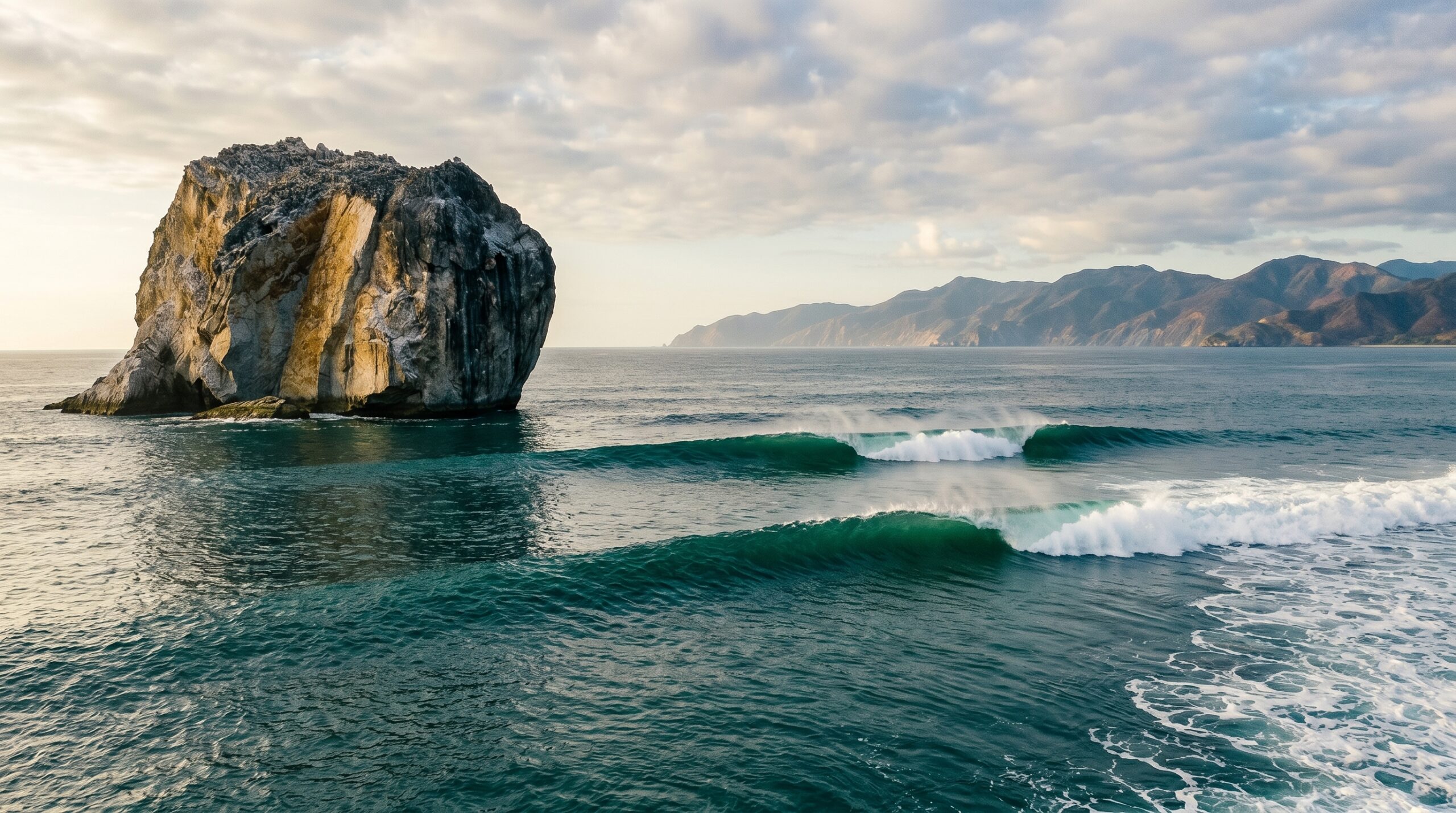
Recon Area: Escape the Tourist Swarms
The traditional surf meccas have hit a saturation point. In Tamarindo, you’ll find surf schools operating every twelve feet, forcing intermediates to dodge foam boards in a lineup that feels more like a crowded swimming pool than a surf break. Further south, Santa Teresa offers consistency at the cost of your wallet; it has evolved into one of the most expensive destinations in the country, characterized by $20 cheeseburgers and a distinct lack of authentic Tico culture. If you want a wave to yourself, you have to stop following the standard itinerary.
Unlock the Complete Spot Breakdown
Don’t surf blind. Access high-fidelity maps, exact swell angles, local wind charts, and secret coordinates on the master dashboard.
02. Esterillos: The Fishing Village Where Locals Actually Live
Esterillos is the antidote to the northern circus. This is a genuine, salt-of-the-earth fishing town where the local culture hasn’t been paved over by high-end resorts. The primary draw here is the versatility of the outer reefs, located right near the spot on the beach where a mermaid statue sits.
When the swell is small, these reefs are an absolute dream for longboards, fishes, and alternative crafts. When a solid pulse hits, the outside peaks turn on for shortboards, offering heavy, open faces.
“Because the peaks are spread out, the vibe remains exceptionally pleasant, and you avoid the cutthroat competition you find in other regions.”
Just south of the reefs lies El Pico. It offers punchy, shifting sandbar peaks that fire on a mid-sized swell, but it isn’t for the faint of heart. The area is notorious for heavy, localized rip currents. You’ll need a deep lung capacity and solid duck-diving skills to handle this spot when it’s overhead.
03. Tactical Deployment Map
Review the relative coordinates below. The Central and Southern Pacific breaks are well-shielded from northern trade winds and highly receptive to southwest swell lines.
Targeted Coordinate Zones
01 // Esterillos Reefs
9.5161° N, 84.3779° W • Mellow outer reef / sandbars
02 // Dominicalito Point
9.2503° N, 83.8647° W • Hollow beach / soft left point
03 // Uvita Whale’s Tail
9.1678° N, 83.7381° W • Isolated beach break
04. Pro-Tip: The $14 Transit Cheat Code
You don’t need a $200 private shuttle or an intimidating 4×4 rental contract to score these waves. While navigating Costa Rican roads can feel like a headache, there is a legitimate “insider” hack: the public bus system.
For roughly $12 to $14, you can hop on an air-conditioned, surprisingly comfortable public bus directly from San Jose to the Central Pacific. Using the budget planners on Costa Rica Surf HQ helps you navigate these logistics effortlessly, allowing you to skip the car rental fees and spend that cash on another week of travel instead.
05. The Secret South of Dominical
The main beach at Dominical is a beast—a heavy, fast, board-breaking beach break with gnarly rip currents that will chew up beginners and spit out fiberglass shards. It’s a thrill, but for a cleaner, more refined experience, look to Dominicalito.
Nestled against thick, emerald jungle and buffered by mountains that block the wind, Dominicalito offers softer, more forgiving waves. Because of this geographic protection, you can often find clean, glassy conditions here even during the messy wet season.
The real crown jewel, however, is Punta Dominicalito. You’ll have to scramble down a rocky hill south of the village to find this left-hand point break. It is strictly for intermediate to advanced surfers and requires a significant Southwest (SW) swell to “turn on.” When it does, you’re looking at world-class rides shared with only a handful of local surfers.
06. Surfing with Whales in Uvita
Continuing south brings you into Uvita, a town that retains a raw jungle feel, completely avoiding the Americanized, “Tamarindo-lite” atmosphere of the north. Here, Playa Hermosa offers a stunning, undeveloped black sand beach with mellow waves perfect for longboarding in absolute peace.

Recon Visual: Untouched Coastlines of the South
Uvita is most famous for the “Whale’s Tail” (Punta Uvita), a formation within a marine national park. It is a surreal experience to sit in the lineup and watch whales breaching out the back while you wait for a set. There is a fickle, completely uncrowded beach break at the southern tip of the tail that offers a truly isolated session for those willing to time the tides.
07. Smarter Preparation for Variable Waves
Scoring on this route isn’t about luck; it’s about strategy. Because you’ll be surfing everything from hollow, heavy beach breaks to fat, rolling points, your board bag needs to be versatile. Before you zip it up, ensure you have the right “step-up” for the heavy days at Dominical or a “fish” for the long, peeling reefs of Esterillos.
TACTICAL FIELD INTEL
Rather than blowing up these spots on social media, use local digital tools like “Spot Guides” to understand the specific tide and wind windows that make these breaks fire. Physical preparation is just as vital—the paddle-outs in the Central Pacific are significantly more taxing than the mellow entries of the north.
Use pre-trip routines to build the paddle endurance required for those shifting sandbars. Finally, leverage local accommodation finders to ditch the party hostels and find jungle-tucked cabins where you can actually hear the ocean.
Conclusion: Costa Rica is Not Ruined
The reports of Costa Rica’s “ruin” are greatly exaggerated; people are just looking in the wrong places. The “Pura Vida” spirit, the empty lineups, and the raw jungle secrets are all still there—they’ve just moved further south.
Are you ready to ditch the standard guidebook and find your own path through the jungle? Wax up your board, get out there, respect the locals, and keep it Pura Vida.