Executive Summary & Quick Answers
Yes, with its warm waters and consistent waves year-round, it is an elite training ground. However, you must seek out protected bays and avoid exposed, heavy beach breaks.
The safest and most consistent spots include Playa Guiones in Nosara, Dominicalito Cove in the south, and the gentle waves of Playa Hermosa (Uvita).
01. Beginner Surf Costa Rica: The Reality of Paradise
Yes, Costa Rica is a world-class training ground for beginners, offering consistently warm water temperatures and reliable swells. However, it requires highly careful navigation to avoid crushing, expert-only beach breaks.
Costa Rica is widely considered the ultimate playground to experience beginner surf Costa Rica style—a tropical dreamscape where the water stays warm year-round and 800 miles of coastline ensure waves are breaking somewhere every single day. You can ditch the restrictive neoprene of a wetsuit and embrace the “Pura Vida” lifestyle in its purest form.
However, this dream has hidden teeth. If you book a flight and paddle out blindly, you are liable to find yourself in a terrifying, heavy beach break that eats beginners for breakfast and snaps boards like toothpicks. A single map mistake or a lack of technical preparation can transform a bucket-list trip into a dangerous ordeal. To ensure your introduction to the Pacific is transformative rather than traumatic, you need to understand the counter-intuitive nuances of the Costa Rican coast.
02. The Best Time to Surf Costa Rica for Beginners (The “Bad” Season)
The ideal season for beginner surfers in Costa Rica is the dry season, spanning November to April, when smaller South Pacific swells yield mild, glassy, waist-high peaks.
If you consult seasoned professionals, they will often warn you away from Costa Rica’s dry season (November to April). They’ll complain that the “massive South Pacific wave machine is asleep,” leaving the coastline with smaller, weaker swells. For a novice learning the basics of beginner surf Costa Rica style, however, this is your absolute golden ticket. The irony of the professional’s “bad” season is that its waist-high, highly manageable swells provide the exact environment you need to master the pop-up without being crushed by a heavy overhead peak.
Furthermore, the dry season introduces the legendary “Papagayos.” In the northern regions like Guanacaste, these winds are a game-changer for wave quality.
“These are strong, consistent offshore winds blowing from Lake Nicaragua that magically groom the waves. They hold the faces perfectly open and keep them from closing out, creating clean lines all day long in the northern regions.” — Mikey, Head Surf Guide at Costa Rica Surf HQ
03. The Playa Hermosa Surf Trap: Heavy Breaks vs. Soft Waves
While “Playa Hermosa” de Uvita offers slow, rolling black-sand waves perfect for learning, the “Playa Hermosa” in Jacó is an extremely heavy beach break that will crush novices.
One of the most dangerous traps for a traveler is the “Playa Hermosa death trap.” Because the name translates to “Beautiful Beach,” it is ubiquitous across the country, but the surf profiles are worlds apart. If you inadvertently navigate to the Playa Hermosa near the party town of Jaco, you are entering an angry, powerful, black-sand beach break strictly reserved for experts. It is a board-breaking reality that does not care about your skill level.
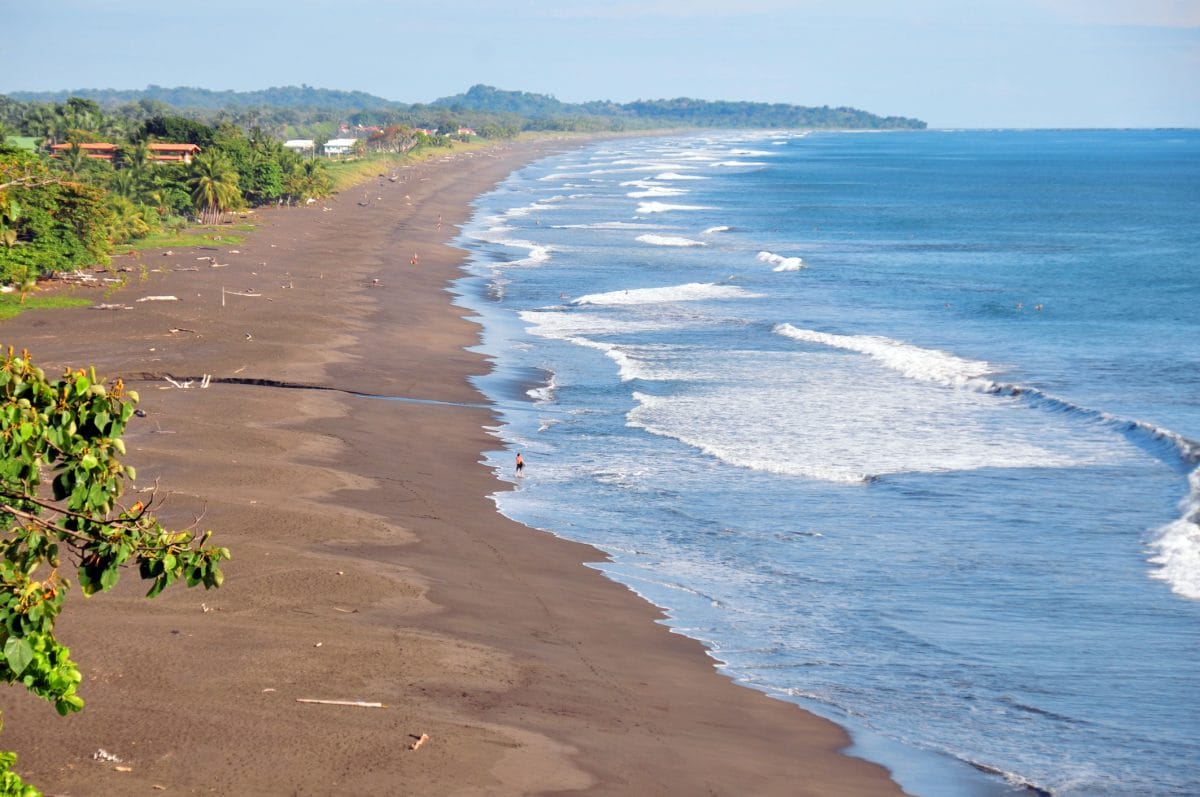
To find the beginner’s sanctuary, you must head far south to Playa Hermosa de Uvita. This is a stunning, undeveloped stretch of black sand with a raw jungle feel and incredibly mellow waves. Here, you might even share the lineup with breaching whales from the nearby marine national park. The stakes of this navigation error are high; do not guess—use a tool like the Spot Guide to pinpoint the exact, safe coordinates before you leave your hotel.
04. Costa Rica Surf Spots for Beginners: Nosara vs. Dominicalito
Nosara (Playa Guiones) is a highly reliable, rolling sand-bottom wave with plenty of room, whereas Dominicalito is a protected, calm cove that filters out raw Pacific energy.
When seeking out Costa Rica surf spots for beginners, proximity is often deceiving. Consider the famous “gateway drug” of Tamarindo: while it offers mellow waves, it is heavily crowded and surfboard rentals are priced like Manhattan cocktails. Before committing to such a commercial hub, run your numbers through our interactive Budget Planner to ensure you don’t drain your travel wallet in three days. For a calmer vibe, head to Playa Guiones in Nosara, a beginner’s dream scenario that breaks 320 days a year with a playful, smooth shape.
Even within a single region, the difference between “hero” and “hospital” is often just a five-minute drive. The main beach at Dominical is a raw, powerful peak known for gnarly rip currents and heavy board-breakers. Yet, just south lies Dominicalito, a hidden jungle cove nestled against thick rainforest.
Dominicalito is “one of the best, most consistent beginner beaches in the entire country,” offering soft, forgiving waves that are perfect for those just starting out. Whether you’re using our detailed Travel Logistics tool to map out local transportation or our curated Accommodation Finder to snag a jungle cabin near the break, remember that the right spot is rarely the most famous one.
| Spot Location | Wave Type | Skill Level | Crowd Density | Optimal Season |
|---|---|---|---|---|
| Playa Guiones (Nosara) | Soft Sandy Beach Break | Novice to Intermediate | Moderate | Year-Round (Glassiest Nov-Apr) |
| Dominicalito Cove | Protected Rocky Reef / Sand | Absolute Beginner | Low | December to April |
| Playa Hermosa (Uvita) | Gentle Sand Bar | Novice | Very Low | December to May |
| Playa Hermosa (Jacó) | Shallow Hollow Beach Break | Expert Only | High | May to November (Swell Dependent) |
05. Surfing Map Coordinates: Safe Beginner Havens
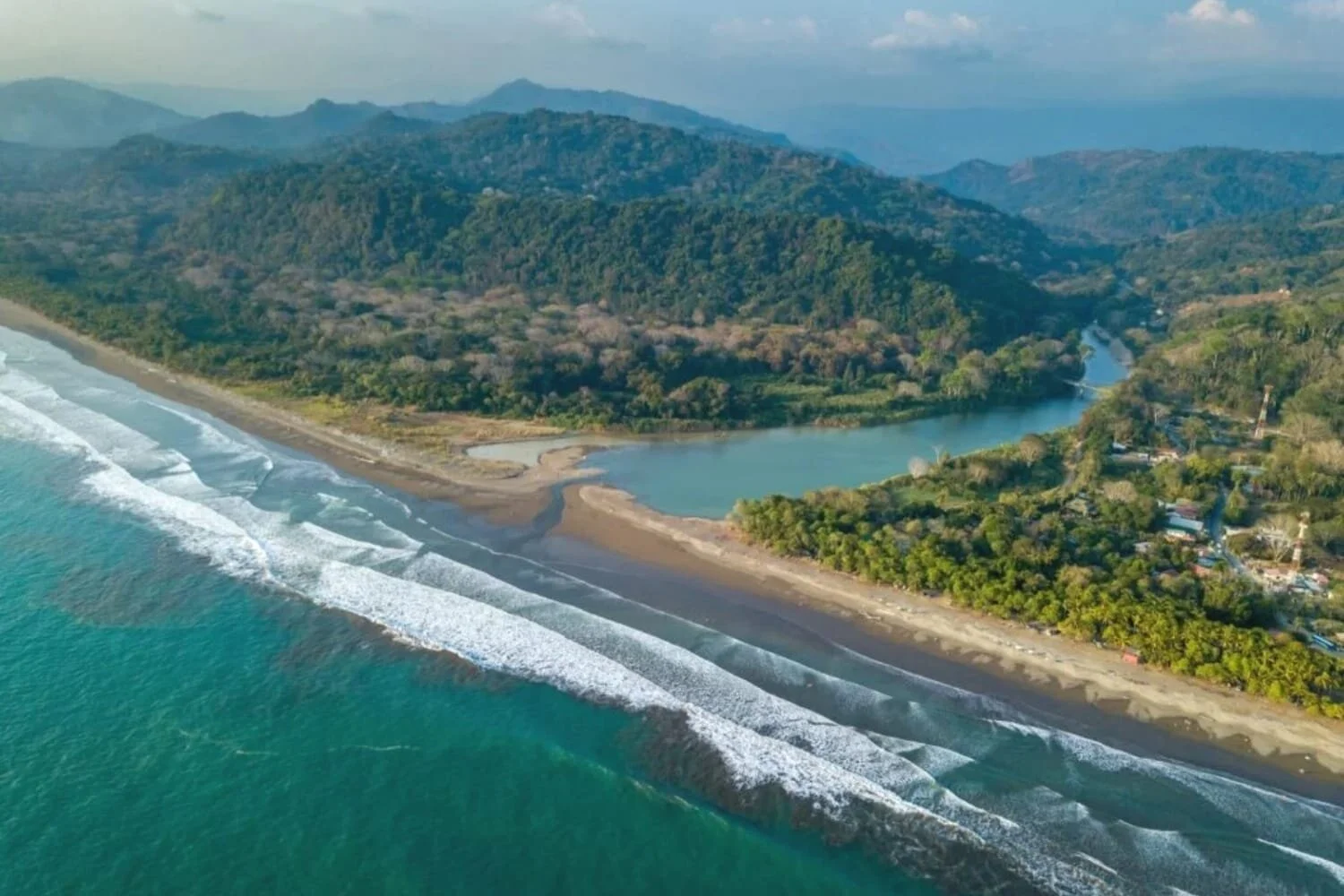
Review the location directory below before booking accommodations. Ensure you are targeting regions receptive to low-velocity beach and point lines, isolating the absolute best Costa Rica surf spots for beginners.

06. Essential Beginner Surf Gear & Tide Management
Beginner success requires using tropical-grade wax (which won’t melt in 85°F water) and timing sessions strictly with incoming mid-to-high tides to keep waves deep and soft.
Success in the water is dictated by details handled on land. A common “noob” error is bringing cool water wax from home. In the intense Costa Rican heat, that wax will melt off your board faster than your dignity during a nose dive. Consult our comprehensive Gear Essentials checklist to ensure you’re stocked with tropical-grade wax.
Equally vital is understanding that the ocean operates on its own clock. Tides matter significantly more than most beginners realize; the wrong timing can turn a glassy peak into “un-surfable soup” in under an hour. Combine this with the physical demand of shifting longshore currents, and it’s clear why preparation is key. If you haven’t engaged in targeted Physical Prep routines for your shoulders and core before your flight, your session will likely end in exhaustion before the tide even turns.
07. Sharing the Water with “Modern Dinosaurs” (Crocodile Safety)
Crocodile safety in Costa Rica requires surfers to completely avoid brown, murky water near active river run-offs, especially after heavy rains.
The final safety warning for any Costa Rican adventure involves respecting the raw, natural ecosystem—specifically the river mouths. Saltwater crocodiles are a reality here, and they frequently frequent the run-offs near surf breaks. These are modern, hungry dinosaurs that demand your respect.
CRITICAL WILDLIFE WARNING
Stay away from the murky river run-offs. If the water looks brown or silty from recent rain or river discharge, stay out of the lineup. Deeply respect the local surfers and always know your personal physical limits in changing conditions.
Surfing in Costa Rica is a privilege that requires an understanding of the environment. If the water looks “off,” it usually is.
Conclusion: The Pura Vida Mindset
A successful first surf trip to Costa Rica isn’t built on luck; it’s built on respect for the ocean’s power and proper planning. By timing your trip for the dry season and targeting the forgiving swells of Uvita, Nosara, or Dominicalito, you set yourself up to catch that life-altering first “green wave.”
The “Pura Vida” lifestyle is highly contagious once you experience the tropical swells and friendly lineups. If you do your homework and respect the local rhythm, the waves are waiting for you.