Executive Summary
Is Dominical good for surfing? Yes, surfing Dominical Costa Rica offers some of the most consistent and powerful year-round beach breaks in the country. However, the main beach is strictly for intermediate to advanced surfers, while beginners must head just south to the sheltered Dominicalito cove to learn safely.
Dominical sits on Costa Rica’s South Pacific coast, in a stretch known as the Costa Ballena — the Whale Coast — right at the gateway to the biodiverse Osa Peninsula. It’s a genuinely different kind of surf town from Tamarindo or Jacó: fewer resorts, fewer crowds, and a wave that doesn’t apologize for being powerful.
If you want polish, look further north. If you want a real, salt-stained hub dedicated to surfing in Dominical Costa Rica with one of the most consistent beach breaks in the country, this is it. This guide covers what you need to plan the trip — season, breaks by skill level, schools, where to stay, getting there, and real costs. You can also cross-reference these details on our master Costa Rica Surf HQ dashboard.
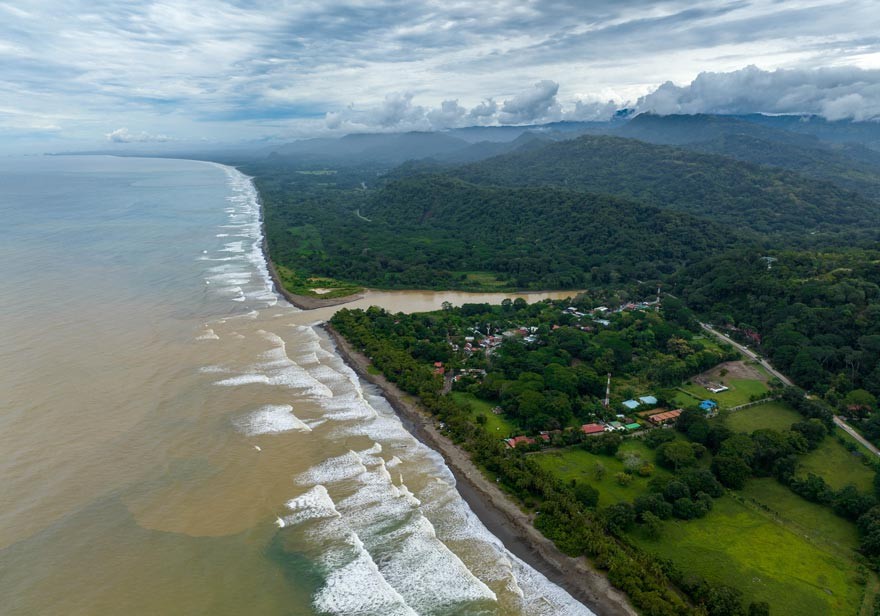
Spot: The town of Dominical, Costa Rica. Note: A laid-back stretch of coastline where the jungle meets consistent Pacific swell.
The Town of Dominical Costa Rica at a Glance
| Category | Intel & Details |
|---|---|
| Best for | Intermediate to advanced surfers, with beginner options nearby rather than in town. |
| Best season | Surfable year-round; dry season (Dec–Apr) for smaller waves; wet season (May–Nov) for big swell. |
| Nearest airport | San José (SJO), ~3–3.5 hours by road, or domestic flights to Quepos/Palmar Sur. |
| Vibe | Laid-back, unpolished, genuinely surf-focused rather than resort-focused. |
| Water | A consistent 78°F year-round; no wetsuit needed. |
| Daily budget | ~$45–70/day (budget) to $90–160/day (mid-range); luxury runs $250–500+/day. |
Dominical Costa Rica Surf: Season & Swell Guide
One of Dominical’s real strengths is that there’s genuinely no bad month here — the beach’s orientation means it picks up swell year-round, which isn’t something you can say about every break in Costa Rica. Understanding the seasons is critical to getting the best dominical costa rica surf experience for your ability level.
- Wet season (May–November): Brings the biggest, most powerful swells, with strong S and SW groundswells pushing into the area’s river mouth breaks and creating the more serious surf Dominical is known for. This is the window for size, but it comes with a real chance of rain, particularly heavy through September and October.
- Dry season (December–April): Brings smaller, friendlier waves and — notably — offshore winds through the winter months that groom the surf into cleaner, more rideable shape. It’s the better window if you’re newer to the sport or simply want more predictable, less intense conditions.
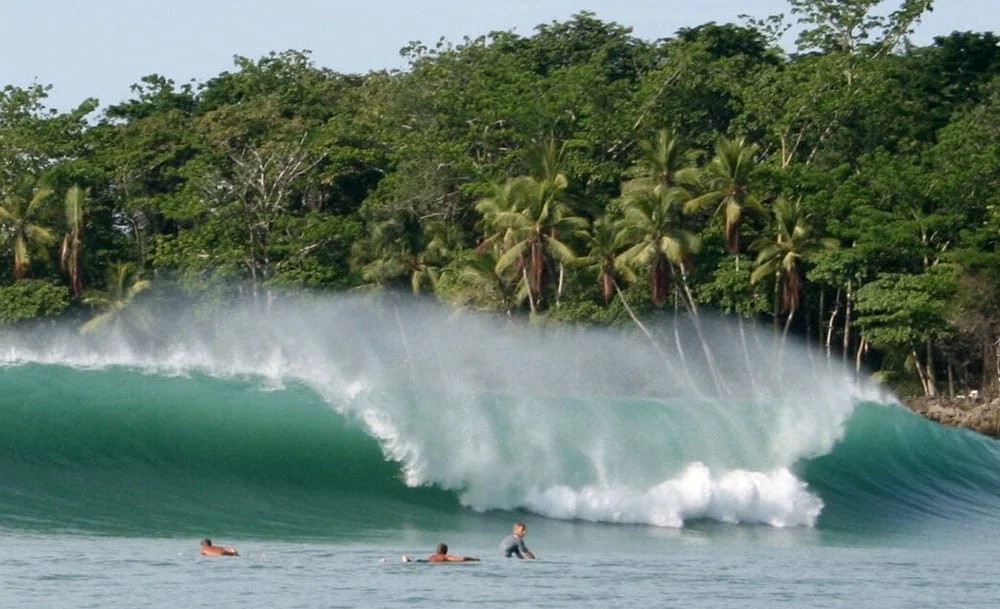
Spot: Playa Dominical. Timing: Wet season groundswell producing heavy, hollow faces.
Best Surf Spots In and Around Dominical
Playa Dominical, the main beach, is the reason this town has a reputation — a powerful, fast, hollow beach break that holds up at nearly any swell size, with the best waves typically found just south of where the Río Barú meets the ocean. Real talk: this isn’t a wave to learn on.
TACTICAL ALERT
Playa Dominical features strong currents and a genuine shore break. It is a spot for surfers who already have some experience, not a first-timer’s beach. Beginners paddling out here risk snapped boards and dangerous situations.
Dominicalito, a short distance south in a more sheltered cove, is where beginners and surf schools actually go. It doesn’t get nearly as big as its neighbor, though the bottom is rockier, so it’s worth surfing with a bit of caution — best around mid to high tide.
Punta Dominical, about a kilometer south of Dominicalito, is a left-hand point break that only wakes up on bigger south swells — 6 feet or more — making it a bonus rather than a daily option. Hermosa de Osa offers a manageable step up from Dominicalito — more sizeable waves, but still approachable for surfers refining their skills. Finally, La Punta, a rocky point break, is where Dominical’s more serious reputation shows up fully with steep drops and fast takeoffs.
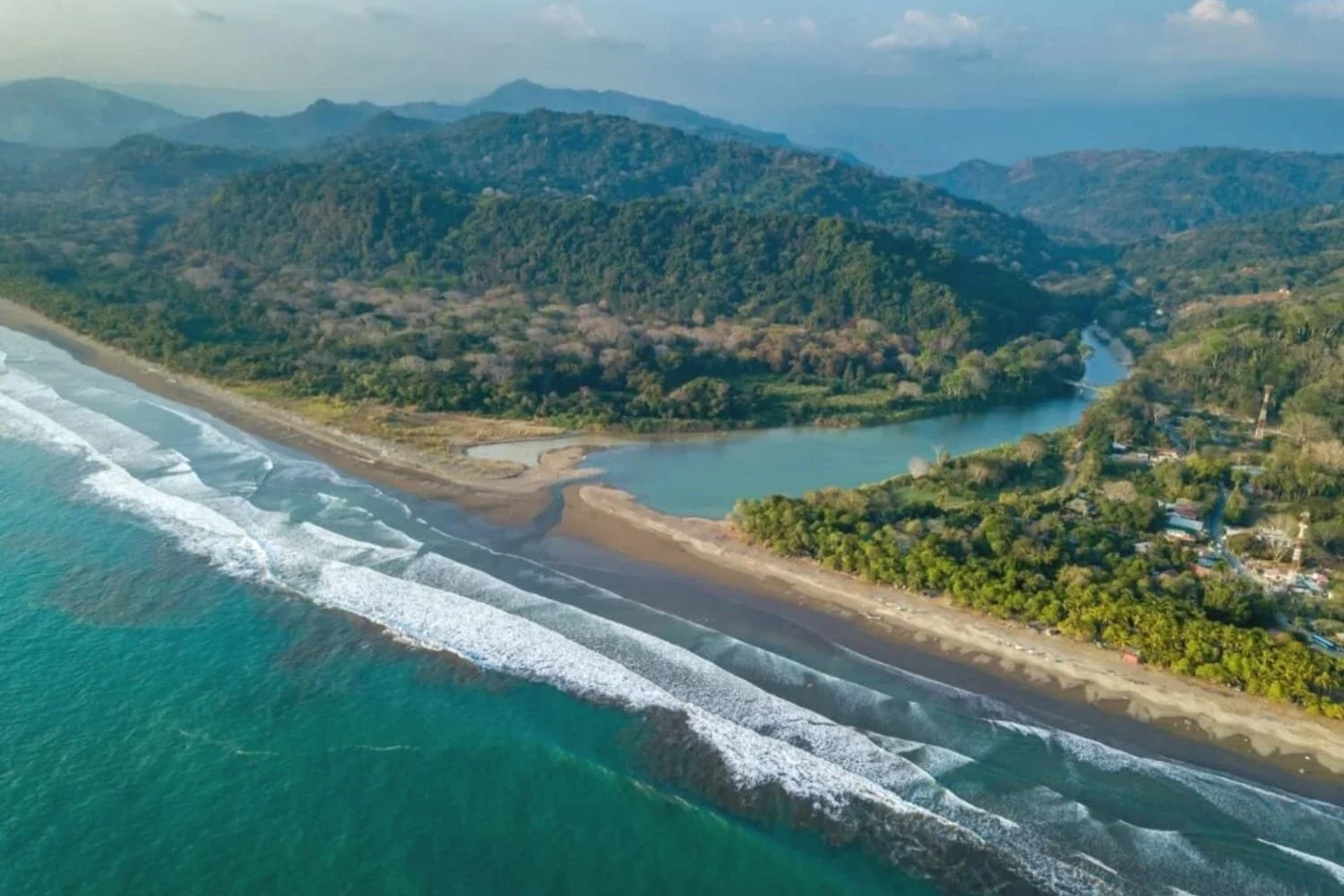
Spot: Río Barú Rivermouth. Note: The sandbars deposited by the river create the heavy, hollow peaks Dominical is famous for.
Surf Dominical Costa Rica by Skill Level
- Beginner: Dominicalito.
- Intermediate: Hermosa de Osa, and Playa Dominical itself when it’s under head-high on a higher tide.
- Advanced: La Punta and Punta Dominical on a big swell.
For the full breakdown of tides and timing across these spots, check our Spot Explorer or see our Dominical surf guide.
Surf Schools & Lessons
Dominical Surf School runs technical, personalized coaching for every level, with a strong reputation for family groups and week-long camp packages that bundle lessons, airport transfers, and accommodation through their partner property right on Dominical Beach.
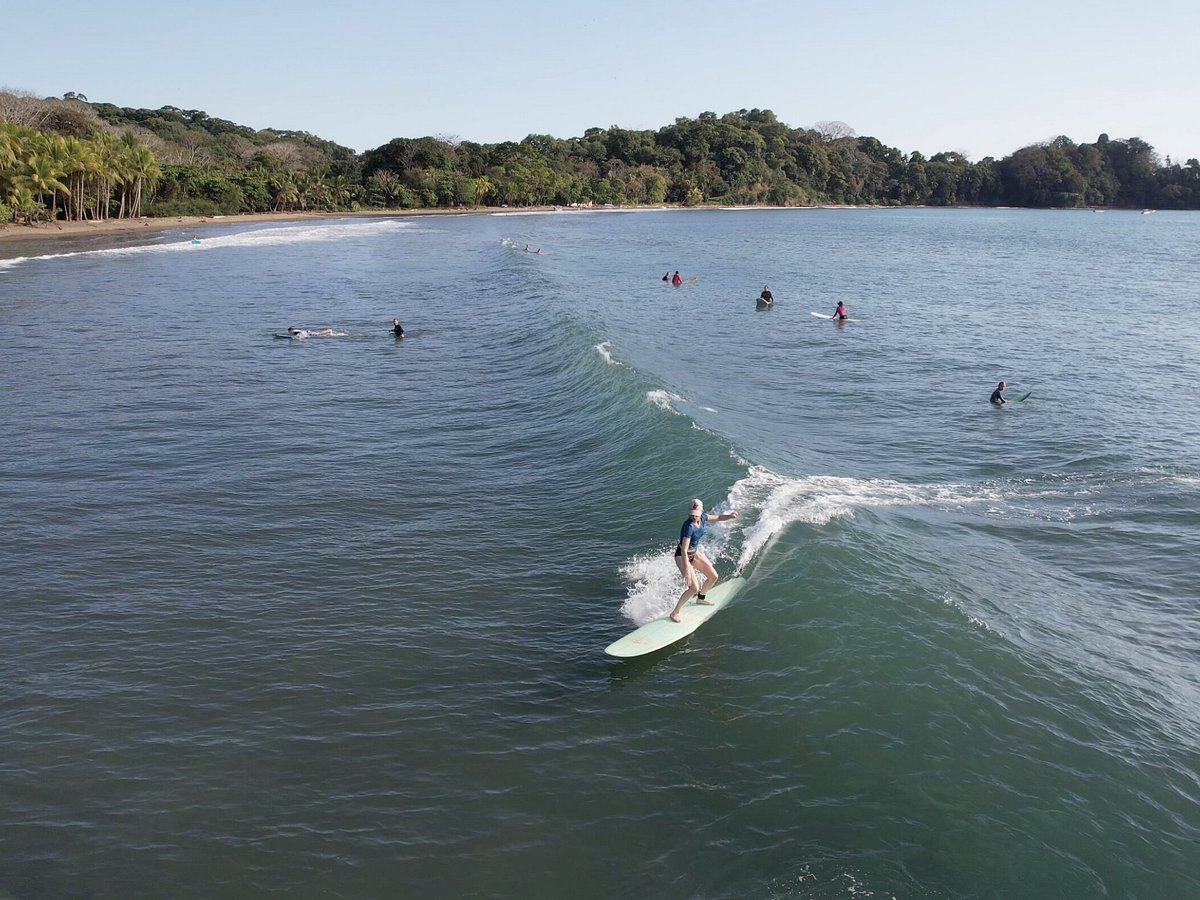
Spot: Dominicalito. Note: Calmer, forgiving waves perfect for surf schools and first-timers.
Kalon Surf takes a slightly different approach — rather than teaching at the powerful main beach, they run beginner sessions at the area’s calmer satellite breaks, scheduling every lesson around the day’s actual tide rather than a fixed time slot. Bodhi Surf + Yoga combines surf instruction with an on-site yoga program, a solid option if you want to build recovery and flexibility work into your surf days.
Logistics: Accommodation, Costs, and Transport
Where to stay in Dominical
We’ve pulled together vetted stays through our travel shop. For seven named picks including Dominical Surf School’s own accommodation partner, Mavi Surf Hotel, see our dedicated Dominical accommodation guide.
Getting there
Most travelers fly into San José’s Juan Santamaría International Airport (SJO). From there, it’s roughly a 3 to 3.5-hour drive via the fully paved Costanera Sur Highway. If you’d rather cut the drive down, a short domestic flight to Quepos or Palmar Sur gets you within about an hour of town by car.
What a Dominical surf trip actually costs
Dominical doesn’t carry the elevated pricing you’ll find in wellness-driven towns up north. Its more laid-back character keeps costs closer to the Costa Rican national average. You can map out your exact daily spend using our Surf Trip Budget Planner.
- Budget: roughly $45–70/day (hostels, sodas, public transit).
- Mid-range: around $90–160/day (private eco-lodge room, mixed dining).
- Luxury: $250–500+/day (high-end jungle villas).
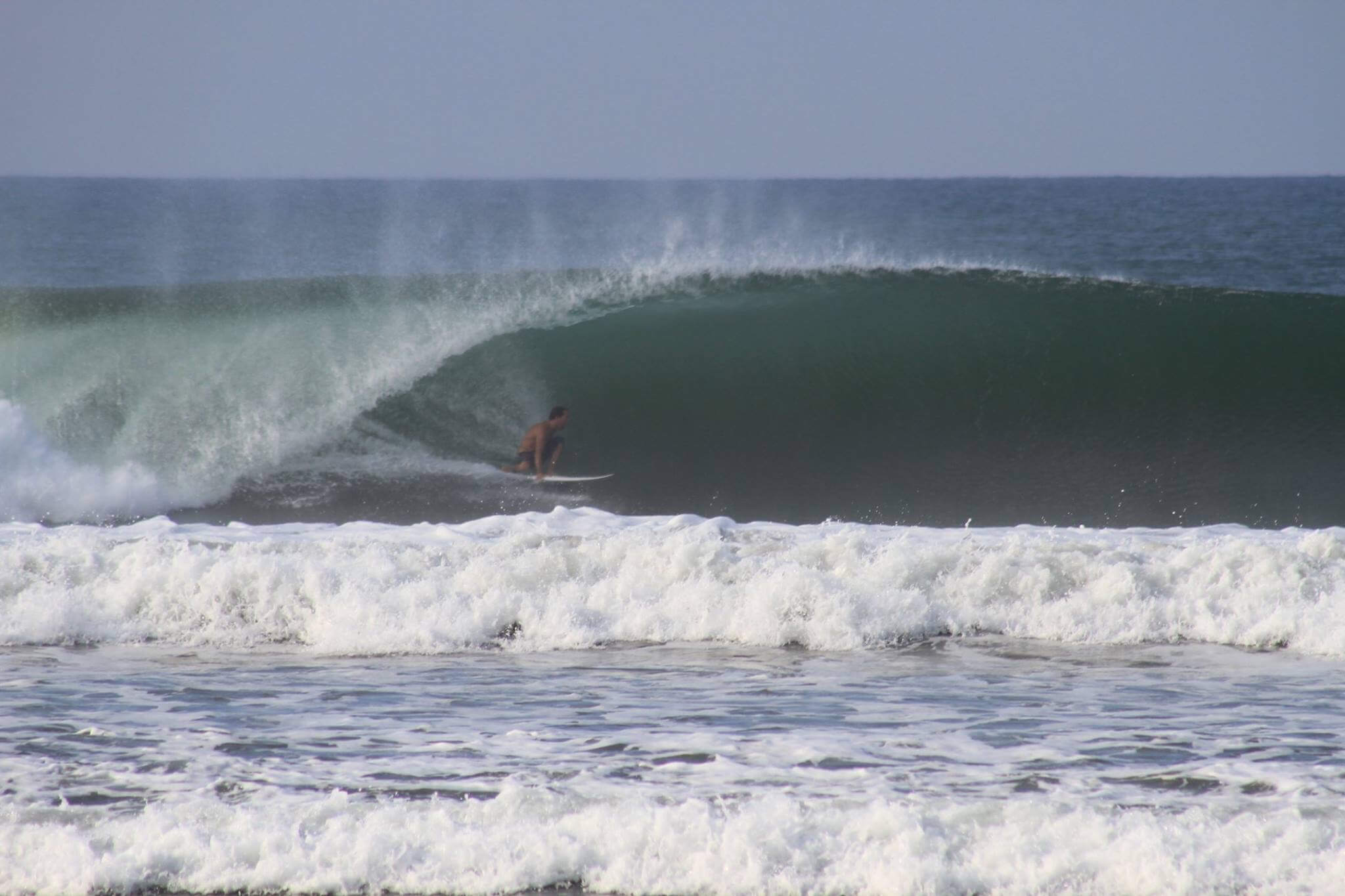
Spot: Playa Dominical. Note: When the sandbars align, this wave produces some of the widest barrels in the country.
Unlock the Complete Spot Breakdown
Don’t surf blind. Access high-fidelity maps, exact swell angles, local wind charts, and secret coordinates on the master dashboard.
Frequently Asked Questions
Is Dominical good for beginners?
Not at the main beach — Playa Dominical’s currents and shore break are genuinely challenging. Beginners should head to Dominicalito instead, where most surf schools actually teach.
What’s the best time of year to surf Dominical?
There’s no bad month, but dry season (December–April) brings smaller, friendlier waves, while wet season (May–November) delivers the bigger, more powerful surf the area is known for.
How do I get to Dominical?
Fly into San José (SJO) and drive roughly 3–3.5 hours, or take a short domestic flight to Quepos or Palmar Sur and drive about an hour from there.
Is Dominical crowded?
No, noticeably less so than Tamarindo or Jacó — the main exception is the Christmas and Easter holiday weeks.
Do I need a car in Dominical?
Not strictly, but having one makes it much easier to reach Dominicalito, Hermosa de Osa, and inland attractions like the Nauyaca Waterfalls.