Executive Summary
When is the best time to surf Nosara Costa Rica? The dry season (December–April) offers the cleanest, most consistent waist-to-shoulder high waves—perfect for beginners and longboarders. However, advanced surfers seeking 3-6 ft+ swells and thinner crowds often prefer the wet season (May–November).
Our complete guide to surfing Nosara covers the basics: the dry season is generally more consistent, while the wet season brings bigger swell. That’s true, but it undersells how much of a genuine trade-off finding the best time to surf Nosara Costa Rica truly is — it’s not just “one season is better.” Here’s the fuller picture.
How Playa Guiones Actually Works
To master the nosara surf season, you need to understand its primary engine. Playa Guiones wants a westerly swell — anywhere from west-northwest to south-southwest — paired with an offshore wind out of the northeast to east. When those line up, the wave grooms into clean, peeling lefts and rights across a sandy-bottomed beach with enough peaks to spread the crowd out.
One genuinely useful fact for planning a session: Guiones holds its shape at pretty much any stage of the tide, so unlike Tamarindo or Jacó, you don’t need to time your paddle-out around a tide chart here. (Though if you want the tide-by-tide breakdown for Guiones’ different zones plus Pelada, Ostional, and Garza, verify local coordinates on our master surf dashboard).
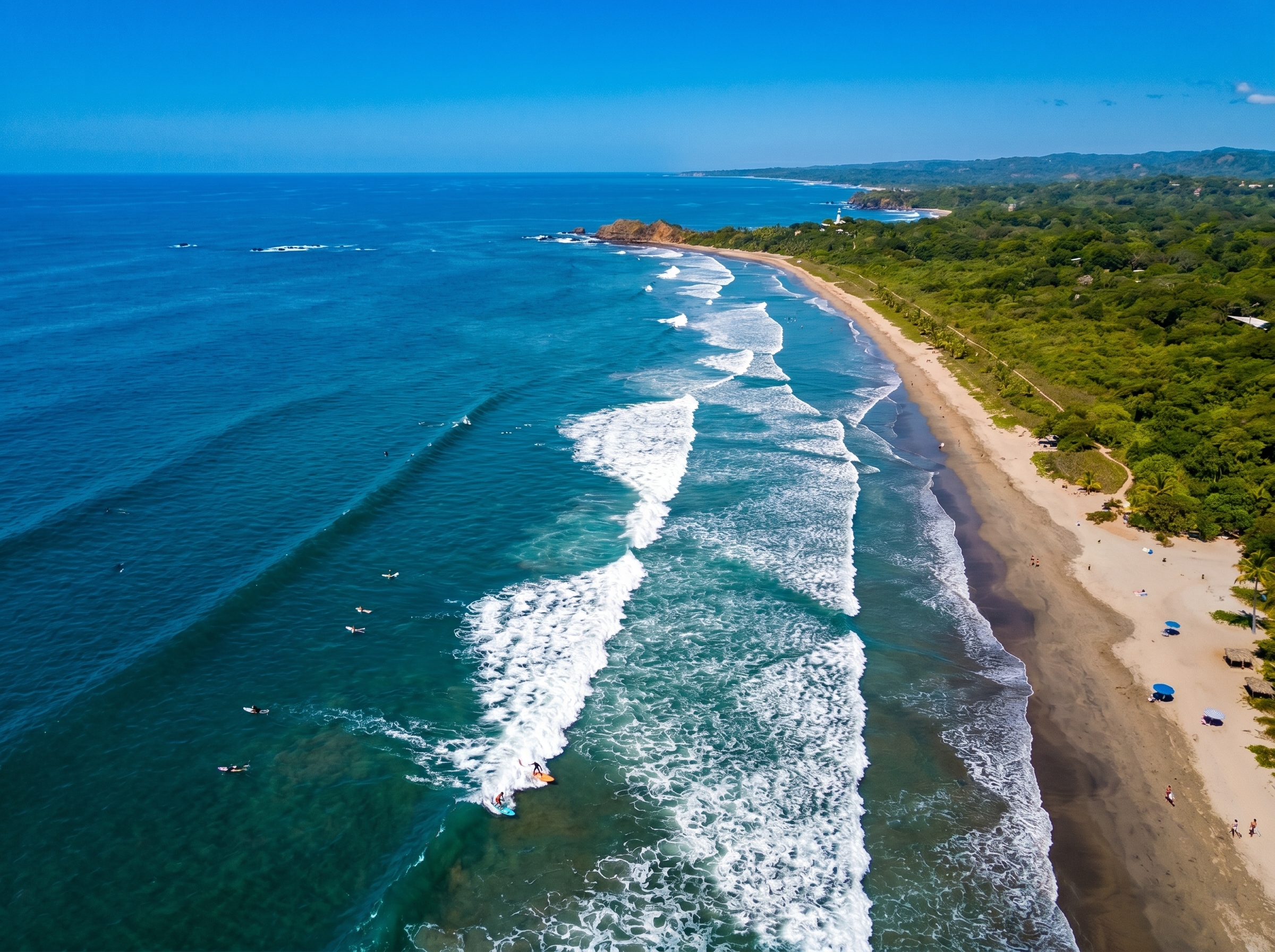
Spot: Playa Guiones, Nosara. Timing: A wide beach break that spreads crowds effectively year-round.
Dry Season (December–April): Cleaner & More Reliable
This is the classic recommended window, and for good reason. Offshore winds and clean groundswell dominate, average wave heights run waist to shoulder height, and rain is genuinely rare — some months average less than one rainy day. January stands out specifically: long-term forecast data puts it as the single most consistent month to surf Playa Guiones, with clean, rideable conditions roughly 16–18% of the time — the highest of any month on record.
“This is the window to book if you’re a beginner or low intermediate. Smaller, well-groomed waves mean more time actually riding and less time getting worked.”
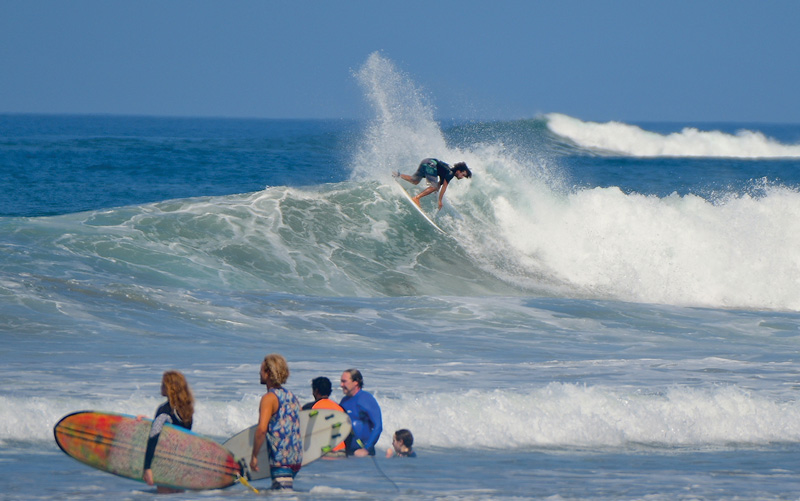
Spot: Inside Guiones. Timing: Classic dry season peeling waves offering forgiving conditions.
Wet Season (May–November): Bigger & Less Predictable
Here’s where the nuance matters. Several current sources actually call May through November the peak Nosara surf season — not the dry season. Consistent south and southwest swell pushes average wave heights up to 3–6 feet, occasionally reaching as much as 10 feet during the biggest windows, which is a genuinely different wave than the waist-high dry season version.
Some local guides also note that wet-season afternoons regularly deliver offshore winds, which can mean cleaner faces than you’d expect during “rainy season.”
TACTICAL ALERT
The catch: Guiones is a beach break, and beach breaks don’t hold overhead swell as gracefully as a point or reef would. Once size pushes past head-high, long stretches of the wave can turn messy or close out entirely. Afternoon rain and river runoff can also rapidly degrade water quality.
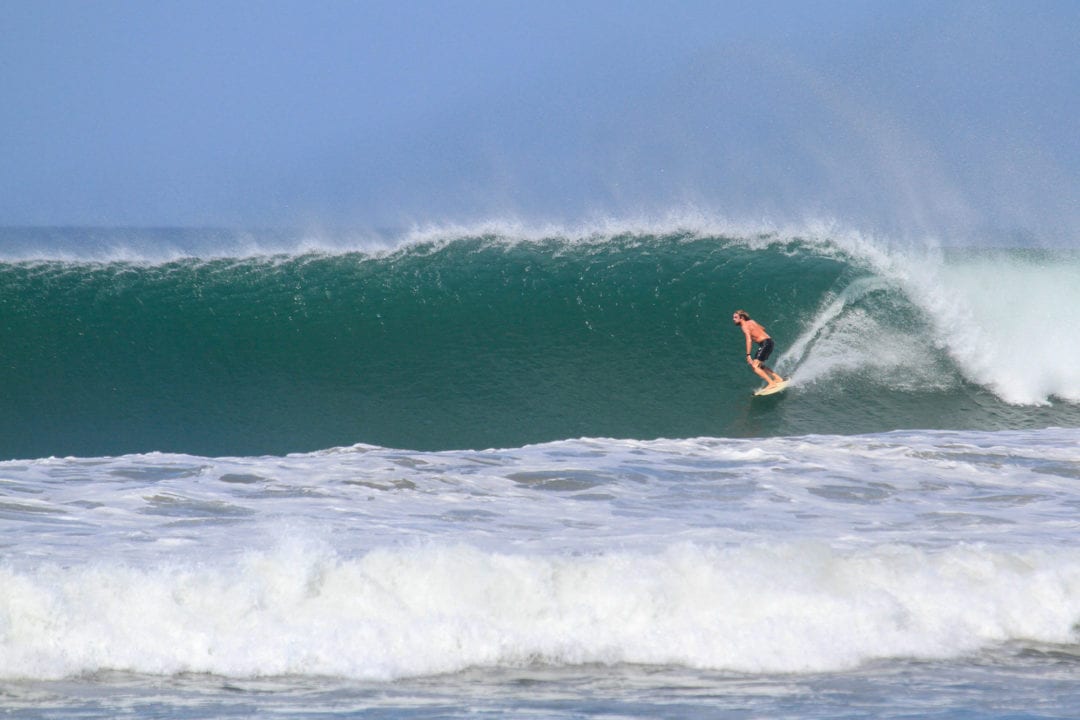
Spot: Outside Guiones. Timing: Heavy wet season southern swell offering real size and power.
Unlock the Complete Spot Breakdown
Don’t surf blind. Access high-fidelity maps, exact swell angles, local wind charts, and secret coordinates on the master dashboard.
The Trade-Off, Honestly
- Dry season gets you consistency, cleanliness, guaranteed sun, and the friendliest learning conditions of the year — at the cost of smaller, less challenging surf.
- Wet season gets you real size and power, thinner crowds, and (per some accounts) cleaner afternoon wind conditions than you’d expect — at the cost of rain, murkier water after storms, and a beach break that can turn unsurfable once it goes overhead.
Neither is objectively “better.” It depends whether you’re chasing consistency or chasing size.
Swell & Wind Cheat Sheet
| Condition Factor | Ideal / Average Status |
|---|---|
| Swell direction | West-northwest to south-southwest |
| Wind | Offshore, northeast to east |
| Tide | Works at any stage |
| Dry season size (Dec–Apr) | Waist to shoulder high |
| Wet season size (May–Nov) | 3–6 ft, occasionally up to 10 ft |
| Most consistent month | January |
Which Season Fits Your Trip?
- First trip, or still building technique: dry season, ideally January through March.
- Chasing real size and you’re comfortable in bigger surf: wet season, accepting some rained-out sessions along the way.
- Want thinner crowds without sacrificing too much consistency: the shoulder months — April or late November — often split the difference, though conditions are less predictable than either season’s core window.
- Combining surf with yoga and wellness time: either season works fine, since a slower-paced trip doesn’t hinge on catching the biggest swell of the year — see our surf-and-yoga guide for how to structure that kind of trip.
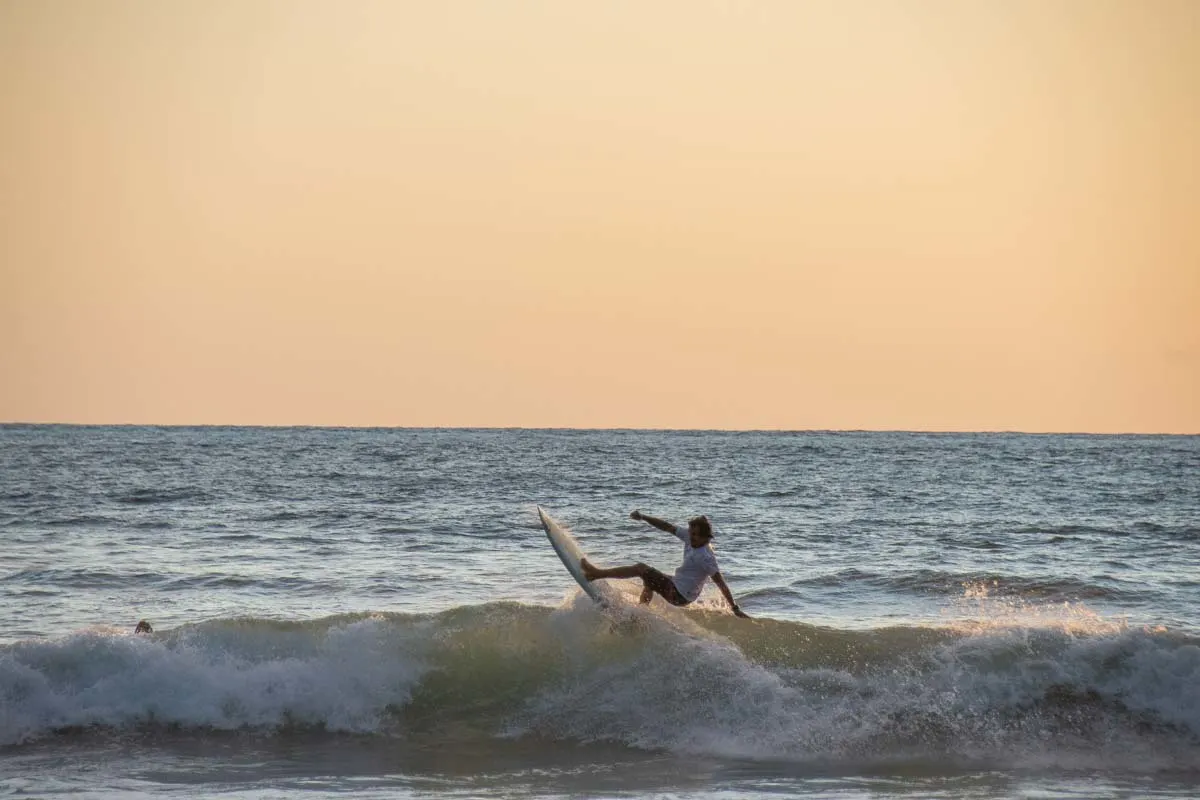
Spot: Nosara Lineup. Timing: Sunset sessions are spectacular in both the dry and transition seasons.
Nosara Surf Season FAQ
Is January really the best month to surf Nosara?
Based on long-term forecast data, yes — it has the highest percentage of clean, rideable days of any month, though “best” here means most consistent, not biggest.
Does Nosara have a low season for crowds?
Wet season (May–November) is noticeably quieter than the December–April peak, since fewer travelers plan around rain.
Do I need to check the tide before paddling out at Guiones?
Not really — it’s one of the few breaks in the region that holds its shape at any tide stage, which simplifies planning considerably. Use the Costa Rica Surf HQ dashboard to analyze spot depths if you venture to outer reefs.
Can complete beginners surf Nosara in wet season?
Yes, especially close to shore where the wave stays smaller, but conditions are generally less forgiving and less predictable than the dry-season window.
Keep Reading
More on planning your Nosara trip:
- The Complete Guide to Surfing Nosara & Playa Guiones, Costa Rica
- Where to Stay in Nosara, Costa Rica: 12 Surf Hotels by Budget
- Surf & Yoga in Nosara: How to Combine Both on One Trip
- Santa Teresa vs. Nosara: Which Nicoya Surf Town Is Right for You?
- Best Surf Spots in Nosara, Costa Rica: A Break-by-Break Guide
And if you haven’t already, grab the full Costa Rica Surf HQ planning guide — 40+ pages of offline maps, break profiles, and travel intel for every surf town in the country.