
Executive Summary
How can I protect my Costa Rica surf trip budget? Avoid default tourist choices by comparing dry vs. green season rates, opting for lesser-known surf towns instead of major hubs, and making strategic decisions on gear rentals, food, and flights. Small adjustments yield massive savings on your overall costa rica surf trip cost.
It’s rarely the big splurges that blow up a Costa Rica surf trip budget. It’s the small defaults — the choices you make without thinking, because they’re the easy option in the moment. Each one looks harmless on its own. Stacked across a full trip, they’re the difference between a trip that stays on budget and one that quietly doesn’t.
Here are nine of the most common ones.
1. Ignoring Costa Rica Green Season Surfing Entirely
Most travelers default to dry season (December–April) without checking what the same trip costs in green season (May–November) — often 20–40% less across lodging and packages. You don’t have to travel in the wettest months to capture the savings; the shoulder months (May, June, November) frequently offer green-season pricing with dry-season-quality weather. Skipping this comparison is an automatic markup you’re choosing to pay, drastically increasing your baseline costa rica surf trip cost.

Spot: Seasonal Swell Dynamics. Timing: Targeting the Green Season shoulder months offers world-class costa rica green season surfing conditions at a fraction of the cost.
2. Defaulting to Tamarindo or Santa Teresa Without Comparing
These two towns dominate Costa Rica surf content, so they’re where most people book first — and where prices are highest. Towns like Playa Negra, Esterillos, or Dominical offer comparable waves at a noticeably lower cost of everything: lodging, food, rentals. Booking the famous town without comparing is paying for name recognition, not better surf.
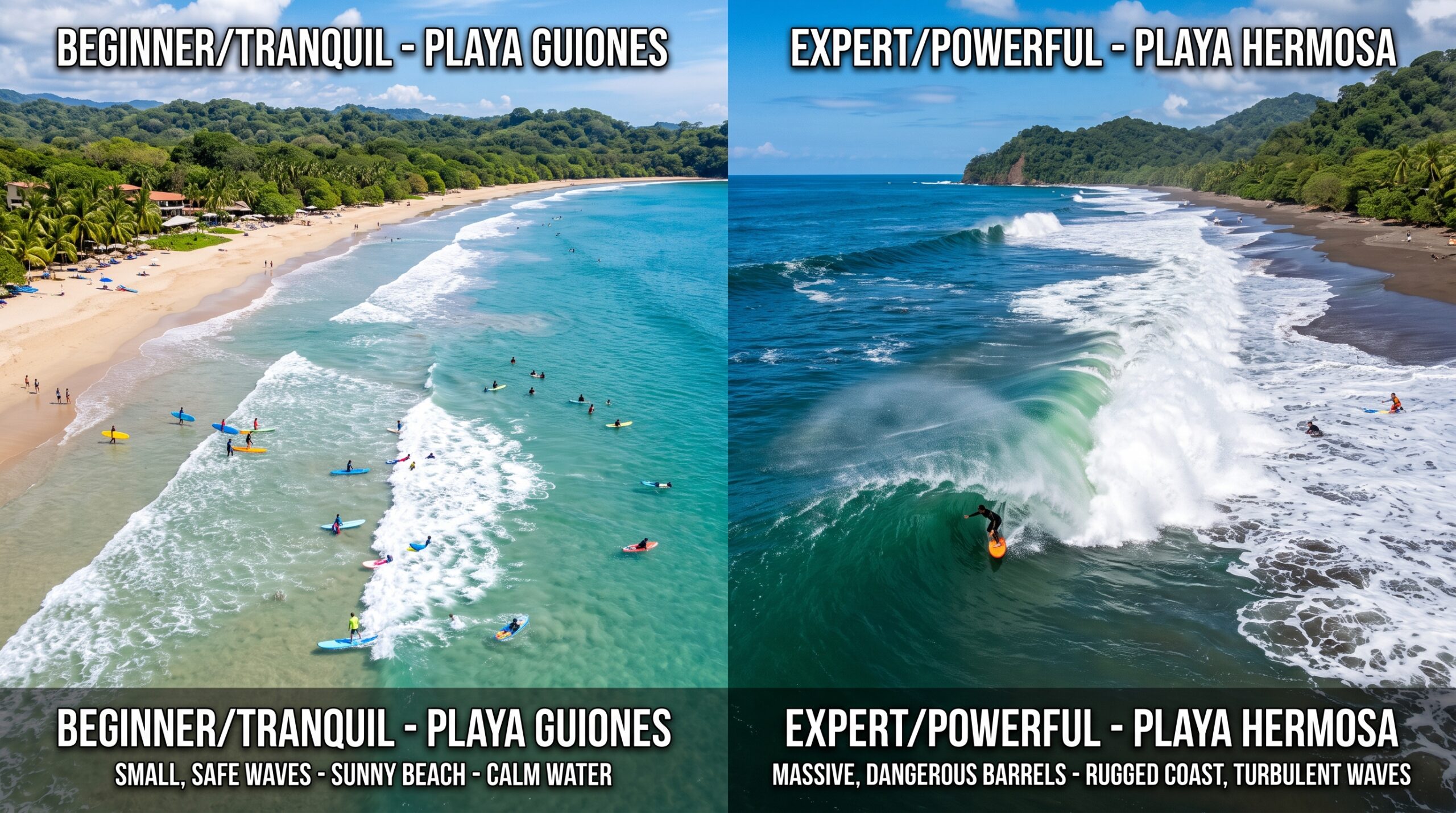
Spot: Uncrowded vs. Crowded Breaks. Timing: Venturing to secondary surf hubs immediately drops your daily expenses while elevating your wave count.
| Costly Default Mistake | Tactical Budget Fix |
|---|---|
| Booking Peak Dry Season | Target Shoulder Months (May, Jun, Nov) |
| Staying in Tamarindo / Santa Teresa | Explore Playa Negra, Esterillos, or Dominical |
| Paying Daily Board Rates | Always negotiate a Weekly Rate upfront |
3. Paying the Daily Board Rental Rate
Shops post a daily rate because it’s the default, not because it’s your only option. Ask for the weekly or full-trip rate before you commit — it’s almost always priced lower per day, and most shops won’t offer it unless you ask.
4. Buying the All-Inclusive Camp Without Pricing the DIY Route
Surf camp packages bundle coaching, meals, and lodging into one price — useful if you’re a true beginner, expensive if you’re not. Before booking a package, price out budget lodging plus a couple of private lessons on your own. For anyone looking to build a costa rica surf trip on a budget, this gap is usually significant. If you do want a packaged camp, compare a few listings first rather than booking the first one you find.
Protect Your Travel Funds
Don’t guess on your expenses. Access our detailed Budget Planner, local cost indices, and uncrowded spot coordinates on the master dashboard.
5. Eating Every Meal at a Beachfront Restaurant
The view costs money, and it’s built into the price whether you order it or not. A casado at a local soda costs a fraction of a similar plate at an ocean-view restaurant. This is the easiest mistake to fix to protect your costa rica surf trip budget and the one people repeat most, purely out of habit.
6. Relying on Cards in a Cash Economy
Plenty of surf towns still run heavily on cash — small sodas, board rentals, shuttle drivers, tip jars. Showing up assuming your card works everywhere means either overpaying at tourist-friendly spots that do take cards, or scrambling for the nearest ATM (which often comes with its own fee) at the worst moment. Pull cash out in a larger town before you head somewhere remote.
TACTICAL ALERT
Always withdraw Colones from official bank ATMs in larger transit towns before heading to remote coastal breaks. Independent beach ATMs frequently run out of cash and charge exorbitant withdrawal fees.
7. Booking During Peak Weeks Without Checking a Calendar
Christmas/New Year’s and Easter week (Semana Santa) are the two most expensive stretches to be in Costa Rica, by a wide margin — prices spike and availability disappears. If your travel dates are flexible at all, shifting by even a week or two outside these windows can meaningfully change what the same trip costs.
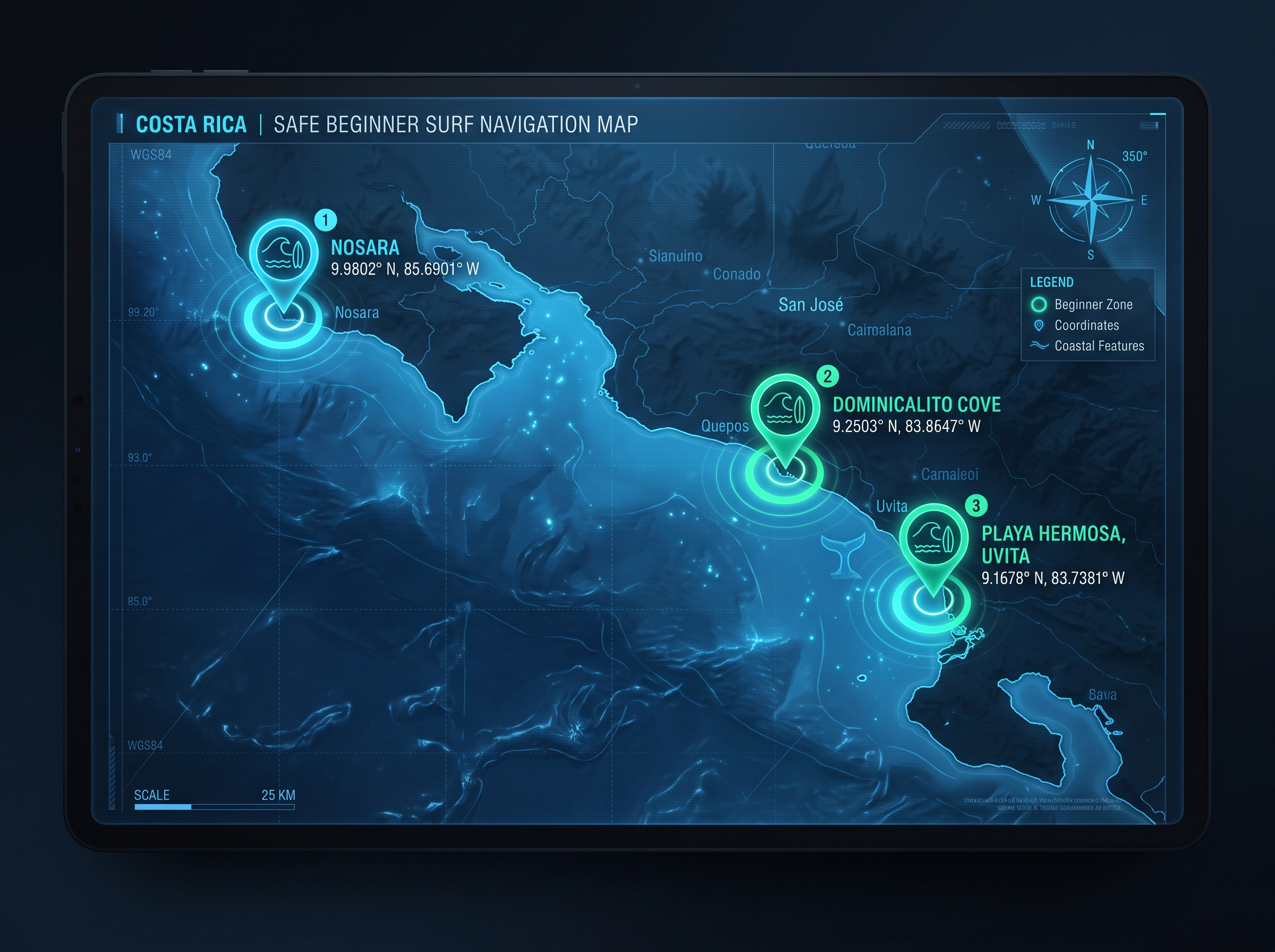
Spot: Map Logistics. Timing: Pre-plotting coordinate distances protects you from expensive shuttle fees and last-minute transit markups during peak weeks.
8. Not Weighing Airline Board-Bag and Baggage Fees
Surfboard bag fees vary enormously by airline — some allow one board free within standard baggage, others charge a flat oversize fee that can rival the cost of a rental. Check your specific airline’s policy before deciding whether to fly with your own board or rent locally. Guessing here can accidentally make the “bring your own board” strategy more expensive than renting.
9. Buying Gear at Tourist-Zone Prices Instead of Packing It
Reef booties, rash guards, a proper leash, sunscreen that doesn’t wreck reefs — surf towns sell all of it, at a tourist-town markup. Pack what you already own, and pick up anything you’re missing before you fly rather than at the shop next to your hotel. If you need to order gear ahead of time, checking online covers most of the list for less than beachfront-shop pricing.
The Bottom Line on Your Costa Rica Surf Trip Budget
None of these nine mistakes are dramatic. That’s exactly why they’re easy to make — each one is just the path of least resistance in the moment. Catch them in the planning stage and the total gap can be substantial without you giving up anything about the trip itself.
“Want to see where your own trip is at risk of overspending? Run it through the Budget Planner inside Costa Rica Surf HQ before you book anything.”
FAQ
What’s a realistic daily budget for a Costa Rica surf trip?
It depends heavily on season, town, and whether you’re booking a package or going DIY — the gap between a budget-conscious trip and a default tourist-town trip can be substantial. Run your specific dates and destination through the Budget Planner for a number tailored to your trip.
Is it cheaper to book a surf camp or plan independently?
For beginners who need daily coaching, a camp often makes sense despite the bundle price. For anyone past beginner level aiming to build a costa rica surf trip on a budget, independent planning — budget lodging plus occasional private lessons — is usually the cheaper route, sometimes significantly so.
What’s the single biggest budget mistake surf travelers make in Costa Rica?
Booking the first option that shows up — the first town, the first camp, the first rental rate — without a quick comparison. None of these mistakes require research trips or spreadsheets to avoid; most just require asking one more question before you book.