
Executive Summary
How can you lower your Costa Rica surf trip cost? You can slash expenses by 20–40% by traveling during the green or shoulder seasons, avoiding overhyped hubs like Tamarindo, leveraging shared shuttles over rental cars, and assembling a DIY surf trip instead of booking a premium all-inclusive camp.
Costa Rica has a reputation problem: people assume a surf trip here costs what a trip to Bali or the Maldives costs. It doesn’t. The gap between what most travelers pay and what a planned trip actually costs comes down to a handful of decisions — and you make almost all of them before you ever land at Liberia or San José.
Here are seven ways to cut your Costa Rica surf trip cost without cutting the surf.
1. Time Your Trip for Green Season
Dry season (December–April) is when Costa Rica charges peak prices for everything — flights, lodging, surf camps, rental cars. Green season (May–November) is the opposite: lower demand, lower rates, often 20–40% cheaper across accommodation and packages. Strategically timing your flights is the biggest lever to reduce your baseline Costa Rica surf trip cost.
The tradeoff people fear is rain. In practice, most days follow a pattern: clear mornings, afternoon showers. Surf sessions happen at dawn anyway, so you’re rarely losing water time — you’re mostly losing golden-hour Instagram shots. September and October are the wettest stretch and worth avoiding if you want more dry days; the shoulder months (May, June, November) often give you green-season pricing with dry-season weather.
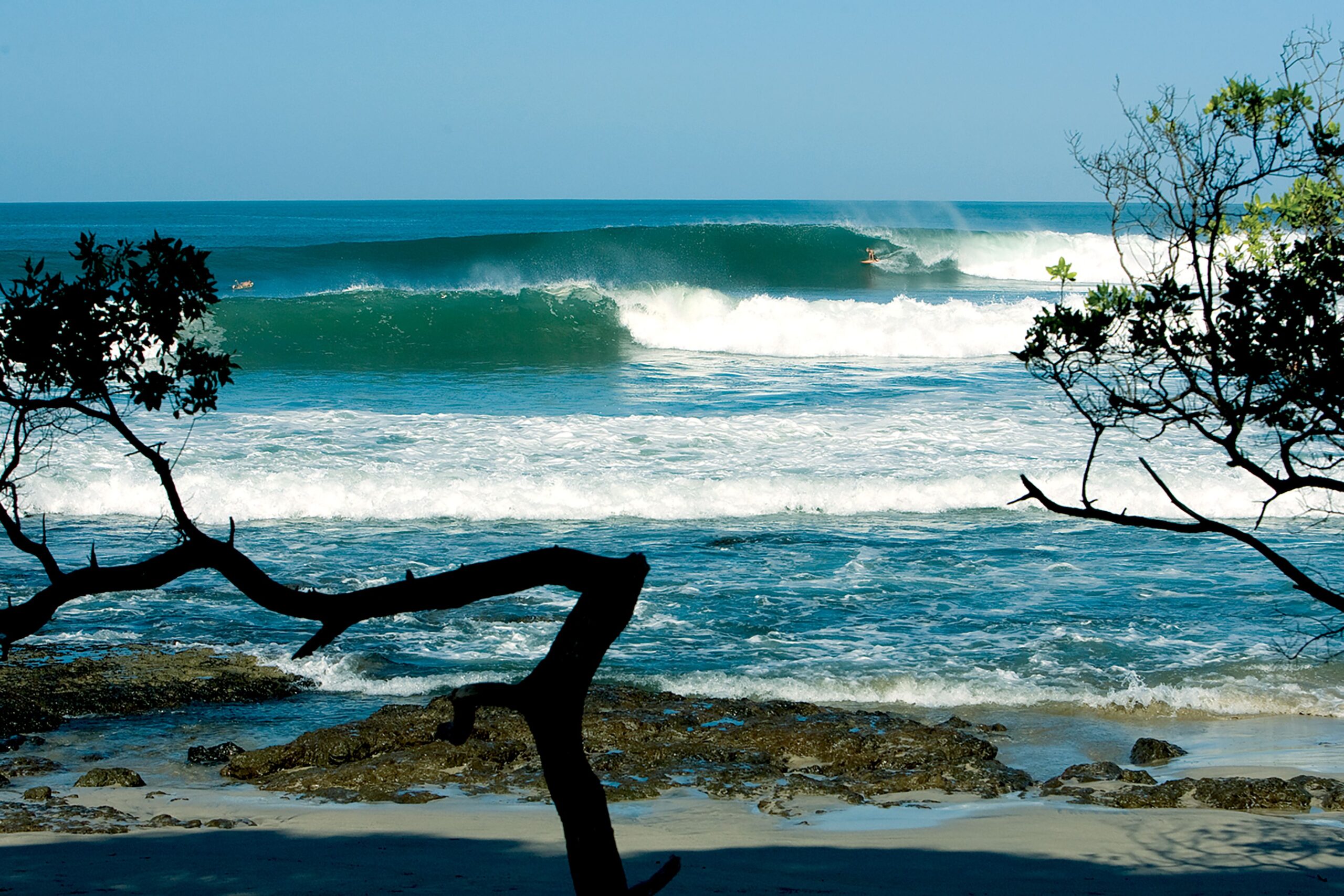
Spot: Pacific Coast. Timing: Green season dawn patrol offering glassy, uncrowded waves.
| Travel Season | Active Months | Pricing Impact | Weather & Surf Conditions |
|---|---|---|---|
| Dry Season | Dec – Apr | Peak Premium Rates | Sunny, Clean Offshore Winds |
| Green Season | May – Nov | 20-40% Discounted | Sunny Mornings, PM Showers |
| Shoulder Season | May, Jun, Nov | High Value / Budget Rates | Solid Swells, Mild Rain |
2. Base Yourself in an Affordable Surf Town, Not a Tourist Hub
Tamarindo and Santa Teresa get the Instagram fame — and the Instagram prices. Lodging, food, and rentals in both towns run noticeably higher than in less-hyped spots with equally good waves: Playa Negra, Esterillos, Dominical, or Puerto Viejo on the Caribbean side.
This isn’t a downgrade. It’s arbitrage. You’re paying for name recognition, not better surf. If you’re still deciding where to post up, run your options through the Basecamp Finder — it’s built to surface exactly this kind of tradeoff between cost, crowd level, and wave quality.
3. Rent Long-Term, or Bring Your Own Board
Daily board rental rates add up fast over a two-week trip. Most shops drop the per-day rate significantly for weekly or full-trip rentals — ask for the multi-day price before you commit to daily.
If you’re traveling for more than a week or two and already own a board you’re comfortable on, flying with it is often cheaper than renting for the full stretch, even after airline oversize-baggage fees. Check your airline’s surfboard policy before you book — fees vary widely and some carriers still allow one board free within standard baggage allowance.
4. Build Your Own Surf Camp Instead of Buying the Bundle
All-inclusive surf camps are convenient, but you’re paying for coaching, meals, and lodging as a bundle — even on the days you don’t need coaching. If you’re already comfortable in the water, a DIY setup (budget lodging + the occasional private lesson when you actually want feedback) is almost always cheaper than the package price.
If a structured camp is still what you want — good for true beginners, or anyone who wants the social side of a group trip — compare listings before booking rather than taking the first result. You can browse Costa Rica options through Tripaneer’s directory to see the spread in pricing by region.
TACTICAL ALERT
Always verify whether your surf camp package includes board rental on “free surf” days. Many camps upcharge for equipment outside of formal lesson hours.
Build Your Tactical Budget Plan
Stop overpaying for your Costa Rica surf trip. Access exact spot maps, season analytics, and logistics on our master dashboard.
5. Eat Like a Local, Not Like a Tourist
Beachfront restaurants in surf towns charge tourist prices for what’s often average food. A casado (rice, beans, protein, salad) at a local soda typically costs a fraction of what you’d pay for a similar plate at a place with an ocean view and an English menu.
If your lodging has a kitchen, use it — a run through the local feria (farmers market) for fruit, eggs, and staples covers several meals for less than one restaurant dinner. This is the single easiest lever on this list to dramatically lower your Costa Rica surf trip cost, and the one most travelers skip out of habit.

Spot: Local Soda. Cost Strategy: Ordering a traditional Casado saves roughly 60% compared to beachfront dining.
6. Take Shared Shuttles or Public Buses Instead of Renting a Car
A private rental car looks convenient, but by the time you add mandatory insurance, gas, and the cost of the car itself, it’s rarely the cheapest way to move between surf towns — especially solo or as a pair. Costa Rica’s public bus network connects most major surf towns directly, and shared shuttle services split the cost of point-to-point transfers across a full van of travelers instead of just you.
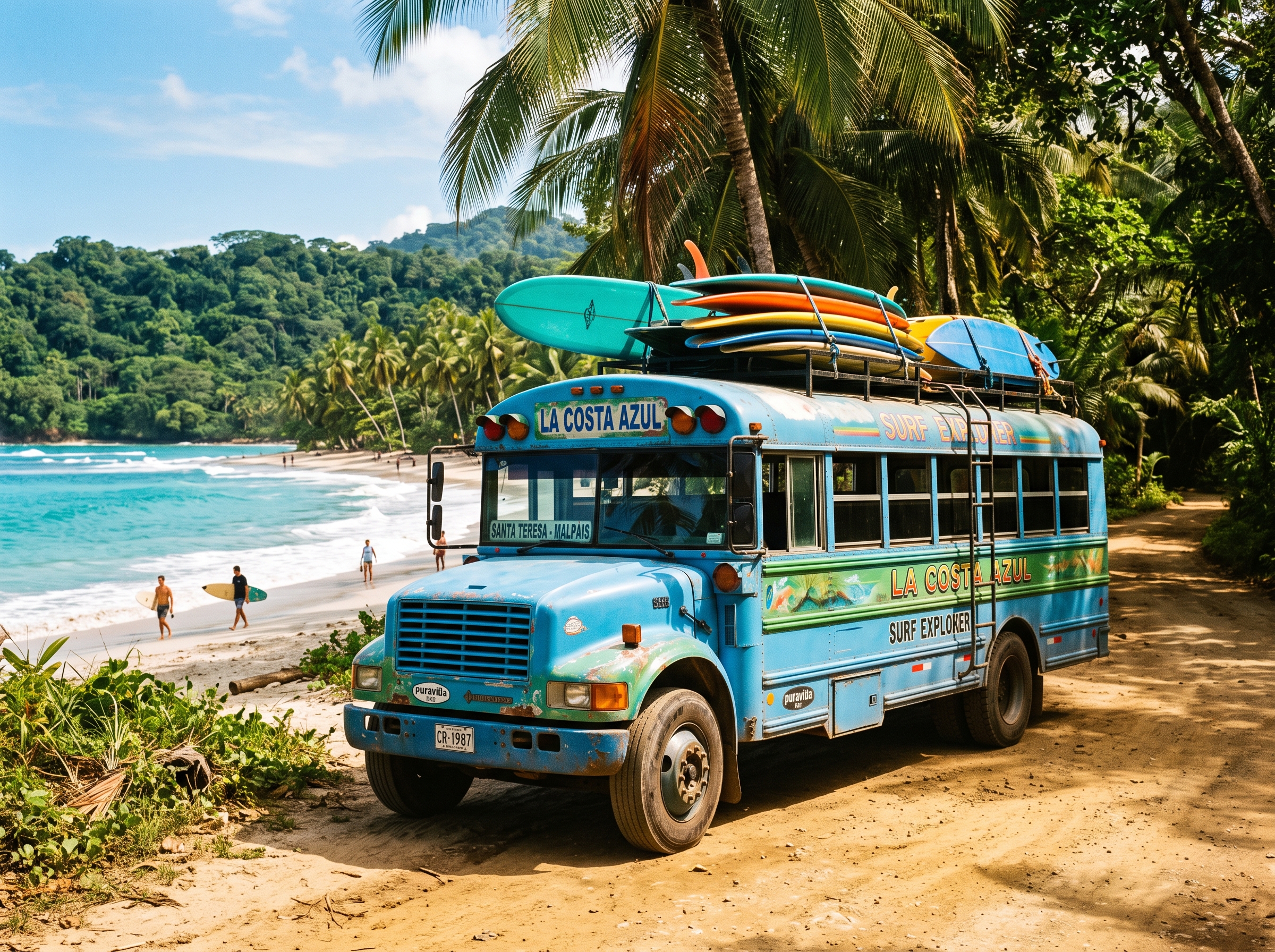
Spot: Beachside drop-off. Logistics: Utilizing shared transport explicitly designed to carry heavy surf quivers.
Price out shared shuttle options first before defaulting to a private 4×4 rental to keep your transportation budget fully optimized.
7. Book Tours and Activities Direct — Skip the Hotel Markup
Zip-lining, waterfall hikes, snorkel trips — hotels and hostels love to arrange these for you, and they mark them up for the convenience. Booking the same activity directly with the operator, or through a direct-booking platform, routinely costs less for the identical tour.
Checking directories directly is worth the time before you let the front desk “take care of it” for you to preserve your travel budget.
“The travelers who overspend aren’t the ones who wanted luxury; they’re the ones who didn’t plan and paid the convenience tax at every step.”
The Bottom Line
None of these seven moves require roughing it. They require deciding in advance instead of defaulting once you’re there — which is really the whole game with optimizing your Costa Rica surf trip cost.
Want to see what your actual trip would cost with these adjustments applied? Run your specific parameters through the interactive Budget Planner inside Costa Rica Surf HQ to get your final numbers dialed.
FAQ: Trip Costs
How much does a surf trip to Costa Rica actually cost?
It depends heavily on season, region, and travel style. A budget-conscious trip using the moves above runs meaningfully less than a dry-season trip based in Tamarindo or Santa Teresa with a rental car and an all-inclusive camp. Run your exact dates through the Budget Planner for a number tailored to your trip rather than a generic average.
Is Costa Rica cheaper than other surf destinations?
It can be, especially outside dry season and outside the best-known towns. It’s not automatically the budget option — that reputation belongs more to spots like parts of Central America or Southeast Asia — but Costa Rica is far more affordable than most people assume going in.
What’s the biggest cost mistake surf travelers make in Costa Rica?
Defaulting to convenience: renting a car without pricing shuttles, booking the first surf camp that shows up in search results, and eating every meal at the closest beachfront restaurant. Each one is a small markup on its own; stacked over a full trip, they’re the difference between this article’s title being true or not.